Showing posts with label Lewis Davidson. Show all posts

Thursday, March 10, 2022

The Hitchcock Project-Lewis Davidson Part Three: The World's Oldest Motive [10.25] and Wrapup

by Jack Seabrook

What is "The World's Oldest Motive"? An answer is suggested by the story of the same title, written by Larry M. Harris, which appeared in the December 1959 issue of Alfred Hitchcock's Mystery Magazine.

Philip Devize may be a wealthy, middle-aged, married man, but that hasn't stopped a young, beautiful woman named Flora Arnold from spending evenings with him. He thinks of murdering his wife, who married him for his money and won't think of divorce, but, as an avid reader of detective stories, Philip knows that he would never get away with it. Fortunately, a man named Schustak walks into his office one day, aware of his predicament and prepared to render a service.

Schustak says that he belongs to a well-known organization and that he can dispose of Mrs. Devize for a fee. Schustak leaves his card with Philip and, in the days that follow, Flora encourages Philip to explore the offer. He telephones Schustak and visits the man at his office, where he balks at the fee of $10,000. Schustak is well aware of Philip's wealth, however, and soon the deal is done.

Philip waits with Flora before going home to confirm that his wife is dead. Yet when Philip arrives home, his wife is very much alive! Meanwhile, Schustak and Flora agree that Philip was an easy man to bilk out of a $5000 deposit for a murder that was never going to happen.
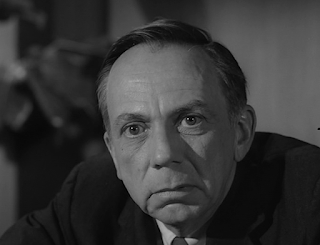
Henry Jones as Alex Morrow

The surprise ending of the story seems to say that the world's oldest motive is not love, it is money. Larry M. Harris (1933-2002), the story's author, was best known as a science fiction writer under the name Laurence M. Janifer. He wrote short stories and novels from the early 1950s until his death and was also an editor, film reviewer, and pianist.

Larry Davidson was assigned to adapt Harris's story for the small screen. His previous teleplays were either based on his own original teleplay for another series ("See the Monkey Dance") or an original teleplay ("Misadventure"), so "The World's Oldest Motive" was the first time he was asked to adapt another writer's work for the small screen. Had the series continued into another season, it is possible that Davidson might have contributed more teleplays. However, this was to be his last for The Alfred Hitchcock Hour.

Expanding a seven-page story into an hour-long TV show requires new characters and new scenes, and Davidson provided both. The TV show begins with Alex Morrow (as Philip Devize has been renamed) in his office, more interested in his stamp collection than his law practice. After his wife telephones and he claims to be working late, we see him dancing with a much younger woman at a dance club called the Casa a Go-Go. The sight of Henry Jones (as Alex) dancing the Jerk, a fad dance that was popular at the time the show was filmed, is very funny, and makes it clear at the outset that the show will be played for laughs. Alex is nervous when Schustak walks by and stares at him; he thinks that the stranger is following him.


A loud acquaintance named Jamieson stops by Alex's table and lets slip that he is married; Fiona (as Flora has been renamed) storms out of the club and Alex rushes after her. On the sidewalk outside, she tells him that their relationship is over, but he assures her that he will find a solution. Alex again sees Schustak watching him.
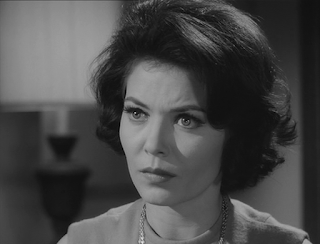
Linda Lawson as Fiona

At home, Alex's wife, Angela, who does not appear in the short story, is portrayed as frumpy, in contrast with the young, beautiful Fiona. Her hair in curlers and covered with a hair net, Angela is wrapped in a shapeless, quilted robe, making eggnog before bedtime and insulting her husband. They bicker about their unhappy marriage and she laughs at the idea that Alex has a girlfriend. Angela denies hiring a man to follow him, though she admits that a man who said he was an insurance salesman came around asking questions.

Back at the office the next evening, Alex takes a call from Fiona, who says she does not want to see him. Schustak appears, cornering Alex in the bathroom and following Alex into his office to make his sales pitch. There is a long dialogue scene between the two men, after which Alex visits Fiona and finds her by the pool outside her apartment complex. She tries to avoid him and he ends up falling into the pool, fully dressed. Again, her youth and beauty are contrasted with his wife's appearance after there is a cut back to the Morrow home. Angela receives a shock from a faulty plug, which suggests a method for murder, and she admits to her husband that she cheated on him when she was younger. Angela slaps Alex before he can slap her, increasing his humiliation.
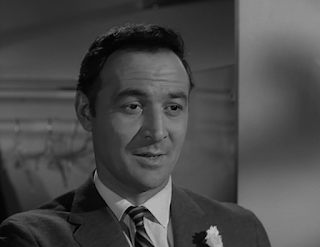
Robert Loggia as Schustak

Angered, his pride hurt, Alex telephones Schustak and arranges a meeting. The men meet on a golf course, where they discuss Angela's murder; the price has been raised to $15,000--$7500 now and $7500 on completion. Alex visits Fiona and explains his plan, but she has an unexpected reaction and tells Alex that he must stop Schustak or she will not have anything more to do with him.

Alex meets Schustak in the man's car and pays him the remaining $7500, but it is too late to stop the process of killing Angela. Schustak tells Alex that he must rush home and prevent Angela from taking fatal pills that have been substituted for her vitamins. Alex hurries home and finds Angela alive and well. Realizing he has been duped, Alex telephones Schustak, who answers and hands the telephone to Fiona. They are packed for a long trip and she promises to send Alex postcards with interesting stamps for his collection. She hangs up and tells Schustak that they should be able to retire soon; they have been running this con game for five years. At home, Alex is crestfallen and resigned to his future with Angela.
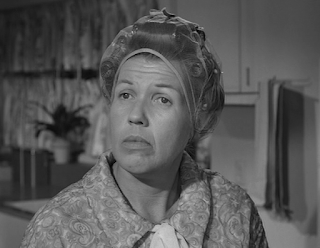
Kathleen Freeman as Angela Morrow

Comparing the TV show to the short story reveals the addition of Alex's interest in his stamp collection, in which his life savings are tied up; the valuable collection means more to him than his wife. There is no mention of his love of detective stories; in the short story, this is how Flora and Schustak know that he will be willing to believe the murder plot. The dance club scene is added and provides humor while underlining the age difference between Alex and Fiona. In the TV show, Fiona pretends to be unaware that Alex is married, and when she finds out, she wants to break up with him. This adds urgency to Alex's desire to be rid of Angela. Schustak follows Alex before appearing at his office, adding mystery and suspense to the early scenes. The scenes at home with Angela are new, and the contrast between her and Fiona is both humorous and pathetic as it underlines the married couple's broken relationship.
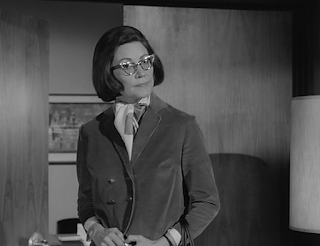
Dee J. Thompson as Miss Rice

The scene by the pool is also new, and having Alex fall in fully clothed adds slapstick humor. Angela's confession to Alex that she cheated on him in the past helps drive his decision to go forward with the plan to murder her. He then meets with Schustak on a golf course rather than at the man's office, in a satire of similar meetings that occur daily in the world of business. In the short story, Flora is supportive of the plan to kill Philip's wife, while in the TV show, Fiona is aghast at the suggestion. Her insistence that Alex prevent the murder adds more suspense and allows Schustak to collect the second half of his fee. At the end, in the TV version, Alex telephones and speaks to Schustak and Fiona after he has been conned; this underlines what happened to him and demonstrates through dialogue that it is a pattern, not a one-time event.
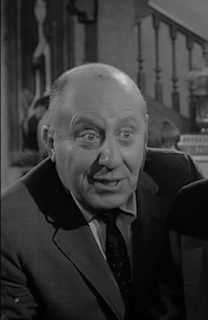
Joseph Mell as Jamieson

"The World's Oldest Motive" features a solid cast and the humorous approach to the story works well, though the show drags a bit in spots and shows the pitfalls of expanding a thin plot into an hour-long episode. It shares similar themes with Davidson's prior teleplays for The Alfred Hitchcock Hour, including a love triangle and murder as a proposed solution.

The show is directed by Harry Morgan (1915-2011), who was born Harry Bratsberg and who was best known as an actor. He was on stage, in movies, or on TV for over sixty years, from the 1930s through the 1990s, starring in four long-running TV series, including M*A*S*H from 1974 to 1983. He does not have many credits as a director and he only worked in this capacity on TV. He directed this and one other episode of The Alfred Hitchcock Hour; he also appeared as an actor in the episode, "Anniversary Gift."

As Alex Morrow, Henry Jones (1912-1999) is wonderful, fully embodying the role of a henpecked, middle-aged man who prefers his hobby and his girlfriend to his wife. Jones won a Tony Award for his 1958 role in "Sunrise at Campobello" and was a fixture in character roles in film and on TV from 1943 to 1995. He was on countless shows, including The Twilight Zone, Thriller, Night Gallery, and The Night Stalker, and he appeared on the Hitchcock show six times, including "De Mortuis." He was also in Hitchcock's classic, Vertigo (1958).

Linda Lawson (1936- ) is suitably sexy as Fiona; born Linda Gloria Spaziani, she was on screen from 1958 to 2005, mainly in television roles. She was in the film Night Tide (1961) and she was seen on the Hitchcock show three times, including "Three Wives Too Many."

Rounding out the leads is Robert Loggia (1930-2015) as Schustak. Trained at the Actors Studio, he appeared on screen from 1951 to 2019, including starring in a spy series, T.H.E. Cat, during the 1966-1967 TV season. Loggia was featured in four episodes of the Hitchcock show, including "The Money."

In supporting roles:
  • Kathleen Freeman (1919-2001) as Angela, Alex's wife; she started out as a child in vaudeville, had a long screen career that lasted from 1948 to 2003, and did extensive work as a voice actress. She appeared on Batman and The Night Stalker, and she was on one other episode of The Alfred Hitchcock Hour--"You'll Be the Death of Me," which starred Robert Loggia.
  • Dee J. Thompson as Miss Rice, Alex's secretary; she was on screen from 1949 to 1967 and appeared in six episodes of the Hitchcock series, including "Three Wives Too Many," with Linda Lawson.
  • Joseph Mell (1915-1977) as Jamieson, the boor in the dance club; born Joseph Mellovitz, he was a familiar face on TV from 1951 to 1977 and also appeared on The Twilight Zone.
Watch "The World's Oldest Motive" here.

Harris's short story appears to have been adapted for German television in 1980 as "Wer anderen eine Grube grabt." The IMDb credits give as sources novels by Larry M. Hansen and Stanley Ellin, but one of the characters is listed as "Schustak," so this may be another adaptation of "The World's Oldest Motive."

The story was also adapted for the remake of Alfred Hitchcock Presents in the 1980s, airing as a 30-minute episode titled "World's Oldest Motive" on USA on April 11, 1987. This version eschews humor for suspense and a frantic pace; the main character's wife is less of a caricature and tries to reconcile with her husband, causing him to regret his actions and try to prevent her murder. The show pales in comparison with the version aired on The Alfred Hitchcock Hour.

Thanks to Peter Enfantino for providing a copy of the short story!

Sources:
The FICTIONMAGS Index, www.philsp.com/homeville/FMI/0start.htm.
Harris, Larry M. "The World's Oldest Motive." Alfred Hitchcock's Mystery Magazine, Dec. 1959, 70-76.
Grams, Martin, and Patrik Wikstrom. The Alfred Hitchcock Presents Companion. OTR Pub., 2001. 
IMDb, IMDb.com, www.imdb.com/.
Stephensen-Payne, Phil. "Galactic Central." Galactic Central, philsp.com/. 
Wikipedia, Wikimedia Foundation, www.wikipedia.org/.
"The World's Oldest Motive." The Alfred Hitchcock Hour, season 10, episode 25, NBC, 12 April 1965.
"World's Oldest Motive." Alfred Hitchcock Presents, season 2, episode 12, USA, 11 April 1987.

*  *  *  *  *

Lewis Davidson on The Alfred Hitchcock Hour: An Overview and Episode Guide

The three episodes of The Alfred Hitchcock Hour with teleplays by Lewis Davidson aired between November 1964 and April 1965, during the show's final season.

"See the Monkey Dance" was first broadcast on British TV as part of the anthology series, Suspense. That episode is now lost and it is possible that Davidson used essentially the same teleplay for The Alfred Hitchcock Hour. The American version features strong performances by Roddy McDowall and Efrem Zimbalist, Jr., in a story of adultery and murder set in Wales that features many twists and turns.

"Misadventure" is an original teleplay by Davidson. This episode also has excellent performances by Barry Nelson and Lola Albright and is similar to "See the Monkey Dance" in that it deals with a love triangle and murder, though this time the events play out in suburban America.

Finally, "The World's Oldest Motive" adapts a short story and takes a comedic approach. Adultery and murder are still the topics at hand, but this time they are played for laughs and no killing takes place.

Taken together, the three episodes display an interest in unhappy marriages and adultery, with the storytelling approaches either purely comic or a mix of comedy and murder. Davidson shows a talent for clever dialogue and complicated plotting, though his original efforts are more impressive than his adaptation.

EPISODE GUIDE-LEWIS DAVIDSON ON THE ALFRED HITCHCOCK HOUR

Episode title-"See the Monkey Dance" [10.5]

Broadcast date-9 November 1964
Teleplay by-Lewis Davidson
Based on "See the Monkey Dance," a teleplay by Lewis Davidson
First print appearance-none
Notes
Watch episode-here
Available on DVD?-no

Episode title-"Misadventure" [10.8]
Broadcast date-7 December 1964
Original teleplay by-Lewis Davidson
First print appearance-none
Notes
Watch episode-here
Available on DVD?-no

Episode title-"The World's Oldest Motive" [10.25]
Broadcast date-12 April 1965
Teleplay by-Lewis Davidson
Based on "The World's Oldest Motive" by Larry M. Harris
First print appearance-Alfred Hitchcock's Mystery Magazine, December 1959
Notes
Watch episode-here
Available on DVD?-no

In two weeks: Our coverage of Sarrett Rudley begins with "The Baby Sitter," starring Thelma Ritter and Mary Wickes!

Listen to Al Sjoerdsma discuss "Fog Closing In" here!

Listen to Annie and Kathryn discuss "The Indestructible Mr. Weems" here!

Thursday, February 24, 2022

The Hitchcock Project-Lewis Davidson Part Two: Misadventure [10.8]

by Jack Seabrook

"Misadventure" begins with a stylized shot, as a beautiful housewife named Eva Martin is shown in her kitchen, her image reflected on the shiny side of a toaster! This domestic scene will soon be turned upside down by the arrival of a man who is not what he seems.

Eva is preparing breakfast for her husband, George, when the telephone rings and she rushes to answer it; the voice on the other end is that of a man, and the look on Eva's face during their brief exchange suggests that she is speaking to her lover, who tells her that he will "'be over in about half an hour.'" George enters as Eva hangs up the phone. Bespectacled and balding, dressed in a suit and ready to go to work at his office, he polishes the silverware in front of him and waxes rhapsodically about the provenance of his fork, knife, and spoon, musing about how these "'little gravediggers'" must have gone in and out of his father's mouth thousands of times. In the midst of his inane commentary, George remarks that he will be coming home for lunch today, news that clearly comes as an unpleasant surprise to his wife. Thinking quickly, Eva tells George that she will be out shopping, and he at first replies that he can eat lunch at the coffee shop, but then changes his mind after he laments having to spend money on lunch when they have good food at home.

The initial scene begins to outline the characters' personalities and their marriage; Eva is a beauty who is starting to show age lines around her eyes; she is stunning in a flimsy robe and either tanned or heavily made up. George is clueless as to his wife's apparent other life, unaware of her infidelity and concerned with saving money in everything he does. On the surface, their marriage appears happy, yet there is distortion underneath, much like the reflected image of Eva on the side of the toaster.

As George kisses Eva goodbye, the camera pans over to a window and we see a man peering in at the Martins. George leaves for work, but not before stopping and turning to Eva. He takes out his wallet and pulls out two dollars, hesitates, and then pulls out a third, giving her the money to buy herself lunch while she is out shopping. That momentary pause between dollars two and three tells us all we need to know about George's attitude toward cash.

The man who had been peering in the widow hides behind a bush until George leaves. Inside, Eva hurries into her bedroom, presumably to get herself ready for her lover's arrival. The man outside knocks on the kitchen door and Eva opens it; he identifies himself as the gas man, and his uniform, hat, and toolbox fit the bill. Eva directs him through a door and down the stairs, where he is supposed to read the meter, but instead he takes a wrench, unscrews a nut, and turns on the gas, letting it begin to flood the basement. Returning to the kitchen, the man accuses Eva of having fooled with the meter and takes out a cigarette as she begins to smell the odor of gas. Eva opens the door to the basement and both smells and hears the rush of gas escaping, but the meter man pretends to smell nothing. He is rude and unhelpful, so she goes down to the meter herself and shuts off the valve. Eva shows spunk when she slaps a cigarette and lighter out of the man's hand; she will need this spunk very soon.

Barry Nelson as Colin
Back in the kitchen, Eva calls the man incompetent and takes out the telephone book to look up the number of the gas company so she can report him. He claims to have an attack of fever and begs her not to report him, afraid that he will be fired. The gas man even pulls out his wallet and shows Eva a photograph of a woman and three young children, presumably his family; she is sympathetic to his entreaties and hangs up the phone, but when he kneels before her in thanks, she has no time for him and tells him to fix the meter. Eva is clearly watching the clock, anticipating the imminent arrival of her lover and anxious to dispense with this unwanted visitor.

The man's continuing protestations of illness lead Eva to offer to make him a cup of coffee. When she puts a jacket around his shoulders to keep him warm, he tells her: "'I've always considered you a very kind and sensitive person.'" Eva questions how he would know and he quickly explains that he has seen her before when he came to read the meter. Yet we suspect there is something more going on here, and our suspicions will soon be proved correct. The man continues to try to portray himself as worthy of sympathy, referring to his "'old wounds'" that he sustained while fighting in the South Pacific, claiming to have been tortured in a POW camp. He accidentally knocks his toolbox to the floor and, among the items that fall out, we see a revolver, which he quickly replaces before Eva can see it. Finally, the man collapses on the floor but, when Eva suggests calling a doctor, he asks if he can take a hot bath or a shower, insisting that he will be fine in ten minutes. A quick cut to the clock shows that it's 8:30--15 minutes have passed since Eva's lover called and said he would be there in half an hour.

Eva is distracted by another telephone call, and the gas man heads through her bedroom and into her bathroom, where he turns on the water in the shower. Wandering back into the bedroom, he unzips and removes his gas company jumpsuit, revealing that, underneath, he is dressed in a suit and tie! Eva rushes her friend, Marge, off the phone, saying that she has a cake in the oven (and failing to mention the gas man in her shower!); she enters the bedroom and the camera shows things from her point of view, panning back and forth across the seemingly empty room. 

Lola Albright as Eva

She pulls back the bedcovers to find the man laid out on the bed, his feet at the head, clad only in his boxer shorts! He is so still that she fears he is dead, but when he says, "'I think I'm going to be all right,'" she is relieved. Eva tries to get him to leave but, when the doorbell rings, she pushes him back down onto the bed and tells him to stay put. She tells him that if he makes a sound, she'll kill him, but they both realize the absurdity of the statement. Eva closes the bedroom door and hurries to the front door to let in her lover, who immediately begins to kiss her passionately. She pushes him off and lies that her husband is on his way home; the handsome, young man makes a hasty exit. Eva begs him to call her tomorrow and he says, "'If I got the time.'" Poor Eva! For such a lovely woman, she is in quite a predicament.

Back in the bedroom, the gas man (or is he?) has put on George's robe, but he quickly removes it and returns to the bed, still wearing only his boxer shorts. Suddenly he holds the upper hand. When Eva threatens to call the police, the man responds by telling her that he would love to tell her husband about her boyfriend and his mid-morning visits--or, in the alternative, she can tell her husband that there is a strange man in her bed and he will not leave.

Suddenly, the man admits that his presence is no accident: he has been watching her, and he produces photographs of her boyfriend visiting three times the week before. (Eva remarks that her boyfriend is a "'landscape artist'" who came two months ago to install a fishpond--for such a stunning woman, she certainly seems desperate for male attention!) Eva seems to warm up to the intruder, sitting down and smoking a cigarette as she complains about her husband, a tightwad who gives her little money. The stranger claims to have only seen George once in his life, a comment that will turn out to be untrue.

The man denies that he is a blackmailer and tells Eva that she is very beautiful and he is not after her money. He takes her cigarette and stubs it out; there is then a dissolve to the next scene, where Eva sits, smoking another cigarette, the implication being that the two strangers have had sex in the interim. The man sits at Eva's makeup table in tears, but she tells him that if anyone has something to cry about, it's her! She calls him a "'most unusual gas man,'" and he admits what we have suspected from the moment he disconnected the valve: he is not a gas man at all! He says that he has been watching her and that he bought a gun. When he observed her boyfriend make regular visits, he was consumed by jealousy, wanting to kill both her lover and her husband.

The man explains his plan to disconnect the gas and rig the basement door so that her husband would be trapped downstairs. Instead of being horrified, Eva is intrigued. The man says that George's demise would be ruled "'accidental death, by misadventure,'" thus providing the title for this episode. The man claims to be madly in love with Eva and once again shifts his identity, telling Eva that he is a private detective who is there to get evidence for the divorce that her husband is planning. Gas man, stalker, private eye--which is his true identity? Eva believes his story each time, despite seeming to think that she is savvy. The stranger's comment that she "'just invested a year of your life for nothing'" goes right over her head--how does the man know that she has been married to George for a year? He must be a detective! In one of the many humorous moments so far in this episode, Eva becomes angry at her husband for suspecting her of being unfaithful, even though such a suspicion would be correct! She takes the china out of the kitchen cabinet and begins to smash it on the floor! Even funnier is the stranger's description of the life she could share with him: "'It's true I'm not rich. Well, I'm in debt up to my ears. But I've got a little apartment. Just a couple of rooms, you know, over a butcher shop, but we can fix it up and it'll be real nice.'" Whether or not this is true or just another part of his scheme, it is obvious that Eva would not last one minute in the setting he describes.

"'Being a widow is the only way you'd get anything out of him now,'" the man points out, and Eva walks over to the basement door and begins to test its opening and closing. "'It was your idea,'" she tells him, and he says, "'Oh no! Not murder!'" Eva is suddenly seductive, calling the man "'Darling,'" and he tells her that his name is Henry. She explains that she can' t live over a butcher shop and tells Henry that she wants him to have nice things, too--Eva is certainly a calculating woman who is used to being successful in using her beauty to bend men to her will. She tells Henry to fix the door before George comes home. She will change her clothes, turn on the gas, and hide in the garden shed!

George Kennedy as George

George arrives home for lunch and is immediately upset to see his father's best bone china smashed on the kitchen floor. The gas man/Henry appears, dressed once again in a suit and tie and, to our surprise, George knows him, addressing him as Colin! They discuss the fact that it's been five years since Colin was last in the house and George appears less than happy to see his brother. He asks if Colin has met his wife and Colin admits that they did meet and got "'on quite intimate terms... during the short time'" they spent together. Colin shows George the photo of his wife and children and tells George that his son Michael died last week. Colin's old car broke down and he could not get his son to the hospital in time to save his life after an attack of appendicitis. Colin reminds George that he refused to give him money for a replacement car two years ago. Colin says it was a case of "'death by misadventure,'" using the episode's title once again. Is he telling the truth about the boy's death? There is no way to know since he lies about so much else, but George does remark that he thought Colin had four children, not the three pictured in the photo.

Colin claims to have broken the china and George accuses him of doing it due to his jealousy of George's mother, whom Colin describes as "'a pleasant hobby my father took up in middle age to occupy and amuse himself with after my mother died'"--the two men, who look nothing alike, are stepbrothers. Colin takes the revolver out of the toolbox and tells George that he came here to kill him but changed his mind. Colin demands his share of the inheritance. When George refuses, Colin gets up to leave and tells George that he has killed Eva and her body is in the basement. George rushes downstairs, coughing due to the gas that is still escaping from the valve, but when he comes back to the top of the stairs the doorknob falls off, leaving him trapped. Colin's plan works perfectly as George succumbs to the gas and we hear his body collapse and fall down the stairs.

Once the coast is clear, Eva re-enters the kitchen, dressed in an expensive suit, her hair coiffed. Colin, whose lies have become so facile that Eva believes every one, tells her that he had to hit George to get him into the basement. Eva tells Colin that "'you practically put us in the gas chamber with your stupidity,'" making her seem like the reincarnation of Cora from The Postman Always Rings Twice. Still claiming to be a detective, Colin tells Eva that he "'wiped up the blood,'" but she calls him a fool and he slaps her, telling her to pull herself together. She tries to call the police, but he convinces her that they would accuse her of her husband's murder. She goes forward with the plan they had previously conceived, first calling her husband's office and then the police, pretending that she is downtown shopping and asking them to check her house, where she fears her husband is injured.

Just as they are about to leave, Colin tells Eva that he can't find the blackmail pictures that he took of her and her boyfriend. He tells her that the pictures must have fallen out when he was in the basement. He says he can't bear to see George, so she calls him a coward and heads downstairs herself. As she calls up from the basement, unable to find the photos, he calls the police, identifying himself as George, and tells them that all is well and they don't need to come. Colin walks to the basement door, where he hears Eva coughing on the stairs, and we see the doorknob fall out once again, trapping her with her husband in the gas-filled basement, her death inevitable. Colin picks up his things and whistles as he exits. The camera fades out on the doorknob that has fallen to the kitchen floor.

"Misadventure" is an elaborately plotted episode that starts out as if it were a comedy but ends up with a double murder. The dialogue is outstanding and the twists and turns that occur in the story make the viewer's head spin. As Colin, Barry Nelson is both engaging and chilling, able to convince Eva of a series of tall tales that don't always seem to be consistent with each other. Lola Albright gives a superb performance as Eva, convincing as a bored housewife, a cheating woman, a seductress, and a conspirator to murder. She believes herself to have the upper hand right up to the end, when she suddenly discovers that Colin has re-used his plot to kill George in order to kill her as well. Underneath her sleek veneer, she is a brash, conniving woman, able to turn on the charm when it suits her.

In a somewhat smaller, less complicated role, George Kennedy plays George as a whining, spoiled, middle-aged man. Like Colin and Eva, he turns out to be something of a monster, as he took all of his inheritance and shared nothing with his stepbrother, who says he blames George for the death of his son. Colin seems willing to give George a chance almost to the end, telling him that he needs only a few thousand dollars, but when George refuses even this his stepbrother goes ahead with his murderous plan. All three characters are motivated by money. George inherited it and won't give it up to his needy stepbrother; he is also a tightwad when it comes to his wife, who complains to Colin that her husband gives her only what she needs to run the house. Eva wants more than her husband has been giving her and turns to other men for attention, sex, and cash. Her plot with Colin is essentially one that she thinks will result in her getting her husband's money. Colin has needed money from his stepbrother for at least two years and claims to blame the man for his son's death; one may wonder if, in the subsequent weeks and months, after George and Eva have been found dead in the basement, Colin will inherit his stepbrother's money? He tells George at one point that, as his only living relative (after he claims to have killed Eva), he will, but is this accurate? If not, was his ultimate motivation money, or was it revenge? And, if so, why the need to kill Eva? Perhaps she had to be done away with because she knew too much about Colin's role in her husband's murder. Colin also gets another sort of satisfaction by seducing his stepbrother's wife, something he alludes to in conversation with George but does not explicitly mention. In any case, one hopes that if Colin is not apprehended, he will turn his obvious talent for manipulation into something profitable.

In many ways, Lewis Davidson's original teleplay for "Misadventure" recalls his teleplay for "See the Monkey Dance," which had aired on The Alfred Hitchcock Hour just four weeks before. Both episodes have small casts and use few sets, so both may have been intended as money-saving shows. The plots also have much in common. In both episodes, there is a love triangle involving two men and a woman. There is a stranger with a gun who takes advantage of another character and pretends to be someone he is not. "See the Monkey Dance" ends with one character killed and another arrested, while "Misadventure" ends with two characters killed and the third escaping scot-free. In both shows, the puppet-master gets exactly what he wants and faces no consequences.

"Misadventure" features an original score by Bernard Herrmann (1911-1975), who scored seven films for Hitchcock from 1955 to 1964 and who wrote original scores for 17 episodes of The Alfred Hitchcock Hour's last two seasons. (More information about Herrmann may be found here). The score is subtle and unobtrusive, mainly using woodwinds but with occasional strings; the music helps build suspense and a sense of unease.

Joseph Newman (1909-2006), who directed "See the Monkey Dance," directs another of Davidson's scripts with "Misadventure." Newman started out as an assistant director in the Golden Age of Hollywood, from 1933 to 1942, before becoming a director of short subjects from 1938 to 1947, and finally of features, starting in 1942. His most memorable film is probably This Island Earth (1955), a science fiction classic. He worked in television from 1960 to 1965 and directed ten episodes of The Alfred Hitchcock Hour, including "The Second Wife". Newman also directed four episodes of The Twilight Zone.

Receiving top billing as Colin is Barry Nelson (1917-2007), a busy actor on the large and small screens from 1938 to 1990. He appeared on the Hitchcock show three times, including "Anyone for Murder?" and was also seen on The Twilight Zone and in Stanley Kubrick's The Shining (1980). As Colin, Nelson is both funny and menacing, and he succeeds in bringing a complicated character to life.

The ultimate noir housewife, Eva is played perfectly by Lola Albright (1924-2017); her career began in movies in 1947 and she added TV in 1951. She was a regular on Peter Gunn from 1958 to 1961 and she was in three episodes of the Hitchcock series, including "The Black Curtain."

Michael Bregan

George Kennedy (1925-2016) is cast against type as George, the penny-pinching, doomed husband. He served in the Army in WWII and fought in the Battle of the Bulge, and his long career on screen spanned the years from 1956 to 2014. Kennedy was on Thriller and won an Academy Award for Best Supporting Actor for his memorable role in Cool Hand Luke (1967). He starred in a series called Sarge (1971-1972), another series called The Blue Knight (1975-1976), and he was a regular on Dallas for three years, from 1988 to 1991. Kennedy appeared in Airport (1970) and its sequels, as well as The Naked Gun and its sequels. He wrote an autobiography called Trust Me (2011) and has a star on the Hollywood Walk of Fame.

Finally, appearing briefly as Eva's boyfriend is Michael Bregan, who had five TV credits between 1964 and 1965.

"Misadventure" aired on NBC on Monday, December 7, 1964, and can be viewed here.

Sources:

Grams, Martin, and Patrik Wikstrom. The Alfred Hitchcock Presents Companion. OTR Pub., 2001.

IMDb, IMDb.com, https://www.imdb.com/.

"Misadventure." The Alfred Hitchcock Hour, season 10, episode 8, CBS, 7 December 1964.

Wikipedia, Wikimedia Foundation, https://www.wikipedia.org/.


In two weeks: Our coverage of Lewis Davidson concludes with "The World's Oldest Motive," starring Henry Jones!


Listen to Al Sjoerdsma discuss "Wet Saturday here!

Listen to Annie and Kathryn discuss "The Canary Sedan" here!

Thursday, February 10, 2022

The Hitchcock Project-Lewis Davidson Part One: See the Monkey Dance [10.5]

by Jack Seabrook

Born in Detroit, Michigan, in 1926, Lewis Davidson is credited with writing two short documentaries: Prelude to Kitimat (1953), which was made in Canada, and The Longer Mile (1957), which was made in England. Beginning in 1959, Davidson wrote for British television, penning episodes for various series including Danger Man, with Patrick McGoohan, The Avengers, with Ian Hendry and Patrick Macnee, and The Saint, with Roger Moore. He wrote the screenplays for two films, including the 1971 Hammer film, Hands of the Ripper, and he only wrote for British TV, with one notable exception, until 1976-1977, when he ended his career by writing teleplays for three American TV series: Ellery Queen, Baretta, and Switch.

The only American TV show for which he wrote teleplays prior to 1976 was The Alfred Hitchcock Hour. Davidson wrote three episodes for that show's last season, in 1964-1965. His last writing credit was in 1976 and he died in 1990 in California.

*   *   *

Efrem Zimbalist, Jr., as the stranger

Davidson's first teleplay for The Alfred Hitchcock Hour was "See the Monkey Dance," which aired on NBC on Monday, November 9, 1964. The onscreen writing credit reads, "From a teleplay by Lewis Davidson," an unusual way for a credit to be worded. This is because Lewis Davidson's "See the Monkey Dance" had been filmed the year before as an episode of a British TV series called Suspense, airing on August 26, 1963. Unfortunately, only two full episodes and one partial episode of that obscure series survive today in the BBC Archives, and "See the Monkey Dance" is not among them, so it is not possible to make a detailed comparison between the earlier version and the one that aired on the Hitchcock show.

The Suspense episode was directed by John Crockett, who directed British TV shows from 1961 to 1965, and the cast included 44-year-old John Gregson as the stranger, 38-year-old William Lucas as the lover, and 33-year-old Jean Harvey as the woman. The Radio Times listing for that evening summarizes the plot: "A fantastic stranger--a curious train journey--a bewildering coincidence, freezing the lover as his normal week-end tilts slowly into nightmare..." The BBC version ran for 50 minutes, from 21:25 to 22:15. One may compare these bits of evidence to the Hitchcock version to guess how similar the two television programs were.

Roddy McDowall as George

In the version that survives on The Alfred Hitchcock Hour, "See the Monkey Dance" begins as a train passing through the English (or perhaps Welsh, based on the name of the fictional town, which is Llangendorag) countryside makes a brief stop at a station and a passenger, whom we later learn is named George (though whether this is his first name or his last name is uncertain), takes the opportunity to place a telephone call to an attractive woman, who tells him that her husband is away for the weekend. They arrange to meet at the "'usual place'" in about an hour and he rushes back to his seat on the train, only to find that he has been joined in his compartment by a somewhat older man. George takes out a book to read, but the stranger insists on engaging him in conversation and criticizes George's "'typical'" behavior before taking a book out of his briefcase. The viewer (but not George) sees that the only other item in the case is a revolver.

The stranger apologizes and the men discover that they both own caravans outside the same town, seemingly in the same field--the stranger insists that the caravan is his, but George suspects that he is mistaken. The stranger accuses George of pretending to own his caravan in order to "'see the monkey dance,'" suggesting that George is toying with him. George calls the stranger "'crazy'" and they even have a brief duel with umbrellas! The train arrives at a small town (Llandrin--both train station signs seem to be Welsh, though nothing else about either town suggests Wales), where George disembarks and walks off briskly, followed at a distance by the stranger, who walks slowly with a limp. George stops to place another telephone call to his lover, who is already in her car, speeding toward their meeting-place.

Patricia Medina as the woman

The stranger picks up a shovel that he finds by the side of the road and follows George to a caravan parked in a field. From inside, George sees the stranger begin to dig a large hole. The stranger reveals that he is digging a grave for George and that he may dig another for the woman; he admits that he fabricated the story on the train so that George would lead him to the caravan. George guesses that the stranger is the woman's husband. The first act of "See the Monkey Dance" is delightful, filled with rapid-fire dialogue, humor, and engaging performances by both actors, who manage to make the most of the confined space in the train car. Roddy McDowall, as George, is dapper and well-groomed, while Efrem Zimbalist, Jr., is almost unrecognizable under a mop of unkempt hair, his face unshaven.

Act two begins as the stranger tells George that he plans to kill him and perhaps his girlfriend, as well. He continues to dig and prevents George from exiting the caravan by threatening him with the gun. The stranger remarks that the woman treated her last boyfriend badly; he claims that he shot the man and wounded him in the leg, resulting in a limp just like his own. They hear a car approaching and the older man hides inside the caravan, but the car drives past without stopping. This is the first moment of suspense in the show, as the viewer waits to see what the stranger will do when the woman arrives and is disappointed when she does not.

George Pelling
as the conductor


The stranger insists that George take over digging the hole, a reversal that underlines the story's themes of doubling and trading places, just as the men appear to have done in the woman's life. It's all very British and reserved, with the two adversaries speaking calmly and rationally about adultery and murder. The second act is made up entirely of dialogue between the two men, as the stranger's plan is revealed and George attempts to talk him out of it.

Another false alarm occurs near the start of act three, as the conversation between the men continues inside the caravan until there is a knock at the door. Has the woman arrived at last? Will the stranger start shooting? No, the visitor is a little girl (later referred to by George as "'the Williams girl'"--earlier dialogue had established that the caravan is parked on the Williams Dairy Farm), who brings a can of milk to "'Mr. George'" (hence, the confusion about whether George is his given name or his surname). The stranger produces a love letter that he discovered, but George insists that the letter is not his. The men deduce that the woman wrote the letter herself in order to drive them to murder, and the stranger recalls that it was his discovery of a similar letter that led him to shoot the woman's prior lover. Her goal must be to rid herself of both of them, with one dead and the other hanged for homicide. The men decide that the only way to resolve the situation is to kill the woman. The third act finds the story taking more twists and turns and, like the acts before it, it is essentially all dialogue between George and the stranger.

Act four opens as the woman speeds along the road in her car and finally arrives at the caravan. Darkness has fallen and George hides in the bushes outside. The woman enters the caravan and is surprised to find the stranger, who reveals that he is not her husband. While they argue inside, George remains outside, removing a nut that holds the car's right front wheel in place. The woman emerges from the caravan and drives off, intending to go to the railway station to pick up George, but, as she speeds along the road, the wheel comes off and she is killed.

Shari Lee Bernath
as the Williams girl


The men hear the crash and George rationalizes his deed, arguing that the woman tried to kill him and the stranger. The stranger tells George that the grave will look suspicious when the police arrive; he points out all of the evidence that will prove George a murderer and walks off into the night as George realizes that the stranger is not the woman's husband after all. George suddenly understands that the stranger is unknown in the area and, as he frantically tries to fill in the grave, the police arrive. George's insistence that he met a man on the train seems unlikely indeed.

The entire scheme appears to have been created and carried out by the stranger, who succeeded in convincing George to murder the woman who may have been the lover of both men in sequence. George turns out to be the monkey of the title, whose emotions and actions are skillfully manipulated by the stranger. Only the woman is unfazed by the stranger--in fact, she treats him with disdain and calls him a coward. Perhaps this is part of the reason that the stranger must kill her by proxy. "See the Monkey Dance" is an acting tour de force by Zimbalist, who convincingly plays an Englishman, and by McDowall. It is heavy on dialogue and there are only a couple of sets; it is enhanced by a playful harpsichord score.

Comparing the U.S. version to the available data on the U.K. version suggests that they may have used virtually the same script. "The stranger" is the older man, "the lover" is George, and "the woman" is herself. The running times are about the same, and the plot summary from Radio Times fits the Hitchcock version.

The show is directed by Joseph Newman (1909-2006), who started out as an assistant director in the Golden Age of Hollywood, from 1933 to 1942, before becoming a director of short subjects from 1938 to 1947, and finally of features, starting in 1942. His most memorable film is probably This Island Earth (1955), a science fiction classic. He worked in television from 1960 to 1965 and directed ten episodes of The Alfred Hitchcock Hour, including "The Second Wife". Newman also directed four episodes of The Twilight Zone.

The fatal crash

Efrem Zimbalist, Jr. (1918-2014), gets top billing as the manipulative stranger; born in New York City, he acted on radio in the 1930s before serving in the U.S. Army in WWII, for which he was awarded a Purple Heart. After the war he acted on Broadway before embarking on a screen career that lasted from 1946 to 2008. Zimbalist was a regular on the soap opera, Concerning Miss Marlowe (1954-1955), and had a recurring role as Dandy Jim Buckley in five episodes of Maverick (1957-1958), but he became famous as the star of the series, 77 Sunset Strip, which ran from 1958 to 1964. He then starred on another long-running series, The F.B.I., from 1965 to 1974, and later was a busy voice actor on such animated TV series as Batman (1992-1995) and Spider-Man (1995-1997). He has a star on the Hollywood Walk of Fame. This is the only episode of the Hitchcock show in which he appeared, and it aired between the end of 77 Sunset Strip and the beginning of The F.B.I.

Roddy McDowall (1928-1998) plays George, the lover who realizes too late that he has been a patsy. Born in England, McDowall was a model as a baby before becoming a child actor on film. His family moved to the U.S. in 1940 to escape the war and he quickly became one of the biggest stars of the Classic Hollywood period, appearing in films such as How Green Was My Valley (1941). He made the transition from child star to adult star and began appearing on TV in 1951. Among his many roles were appearances on The Twilight Zone, Batman, and Night Gallery; he was on The Alfred Hitchcock Hour twice, including "The Gentleman Caller." Other great films where he played memorable roles include Planet of the Apes (1968) and The Poseidon Adventure (1972). He worked on TV and film right up until his death in 1998.

Patricia Medina (1919-2012) plays the woman. Born in Liverpool, England, she was on screen from 1937 to 1973. She was married to Joseph Cotten, another Hitchcock favorite, from 1960 to 1994, and appeared on Thriller twice. This was her only role on the Hitchcock show. She wrote an autobiography called Laid Back in Hollywood (1998).

George Pelling (1914-2008) makes a brief appearance as the train conductor. He was born in South Rhodesia and his screen career lasted from 1946 to 1966. He was on Thriller and The Outer Limits, and he was seen in no less than eight episodes of the Hitchcock show, including "Banquo's Chair."

Shari Lee Bernath (1952- ) plays the little Williams girl who brings a can of milk to the caravan. She was on screen from 1958 to 1973 and also appeared on The Twilight Zone. This was her only appearance on the Hitchcock show.

The distinctive score is by Lyn Murray (1909-1989), a busy composer who is credited on 34 episodes of The Alfred Hitchcock Hour. He worked on radio, in film, and on television starting in the 1930s, scored Hitchcock's To Catch a Thief (1955), and won an Emmy in 1986.

Watch "See the Monkey Dance" online here.

Sources:

Grams, Martin, and Patrik Wikstrom. The Alfred Hitchcock Presents Companion. OTR Pub., 2001.

IMDb, IMDb.com, https://www.imdb.com/.

"Schedule." BBC Programme Index, BBC, https://genome.ch.bbc.co.uk/schedules/service_bbc_television_service/1963-08-26.

"See the Monkey Dance." The Alfred Hitchcock Hour, season 10, episode 5, CBS, 9 November 1964.

Wikipedia, Wikimedia Foundation, https://www.wikipedia.org/.


In two weeks: Our coverage of Lewis Davidson continues with "Misadventure," starring Barry Nelson and Lola Albright!


Listen to Al Sjoerdsma discuss "Wet Saturday here!

Listen to Annie and Kathryn discuss "There Was An Old Woman" here!