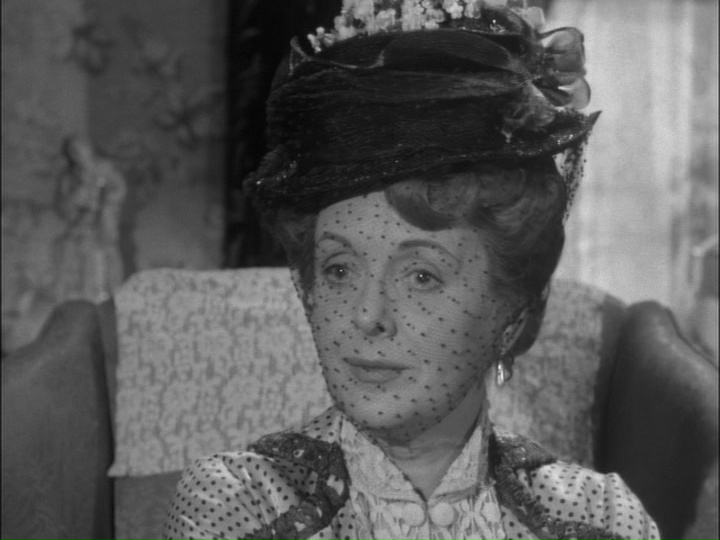
The last two scripts that Robert C. Dennis wrote for Alfred Hitchcock Presents were "A True Account," where the teleplay is credited to Dennis and Fredric Brown, and "Invitation to an Accident," which aired on CBS on Sunday, June 21, 1959, as the final new episode of the fourth season of the series.
This episode was based on a story of the same title by Wade Miller that ran in the July 1955 issue of Ellery Queen's Mystery Magazine. The tale begins as Albert Magnum, a bachelor in his forties, visits his old friend Virgilia Pond, who lives in an exclusive neighborhood in San Diego. He meets her second husband, Joseph Pond, and looks down on the man's recently-acquired fortune in comparison with the inherited fortune of her first husband, Cam Bedsole. Albert and the Ponds share drinks, small talk, and dinner, and after the meal Virgilia leads Albert outside to the rear garden, where she confesses that she is having an affair with her ex-husband. As she heads back to the house, scaffolding from an upper floor suddenly is dislodged and crashes to the ground, nearly killing her.
 Albert soon comes to believe that Pond staged the accident in order to murder his unfaithful wife. He visits Virgilia again and she tells him that Joseph has a "touch of ptomaine." Albert sneaks into her garden shed and finds a box arsenic missing that had been there the week before. He concludes that Pond took poison to immunize himself before feeding a fatal dose to his wife. Albert decides to invite Joseph on a fishing trip to Mexico, planning to confront the man about Virgilia. They travel together to an empty beach and make camp, spend the day fishing, and then sit around the campfire after dark.
Albert brings up the subject of murder in a roundabout way, trying to suggest to Pond that he knows what the man is planning to do to his wife. Pond finally catches on but admits that he thinks that Virgilia's lover is Albert! The scaffolding had been meant to kill him but, when it failed, the arsenic in the coffee he just drank should do the trick.
Miller's story is very well written. Magnum underestimates Pond at every turn, thinking himself smarter and more refined that Virgilia's rough-hewn husband. Magnum believes that he was invited to be a witness to the accident that nearly killed Virgilia; in reality, though, the real accident occurs when Pond mistakes him for his wife's lover and murders him!
 |
| Gary Merrill as Joseph Pond |
Robert C. Dennis's script for this episode displays traits recognizable from his other work on this series: adding opening scenes to set up the story, a heightened focus on key objects, and a tendency to hammer the point home at the conclusion.
 |
| Alan Hewitt as Albert Magnum |
This is followed by a short scene of Virgilia driving Pond home, where he suggests inviting a friend over for dinner and she responds by saying that she will invite a "very old admirer." It is clear that Pond seeks to identify her lover and thinks that the man she invites will be the guilty party.
The following scenes follow the story closely. When Virgilia and Albert go into Joseph's garden shed workshop, Albert picks up a can labeled "Arsenic" and looks at it; the can is shown in closeup and Dennis thus foreshadows the show's climax. Later, when Albert goes back to the Pond house and checks the workshop, it is made very clear that the can of arsenic has disappeared--Albert even traces his finger over the missing spot to underline the point for the viewer. Albert visits Mrs. Bedsole and outlines his suspicions about Joseph's plans; she tells him that he must protect Virgilia. He visits the Ponds, but this time, unlike in Miller's short story, it is Pond who invites Albert on a fishing trip, not the other way around.
 |
| Highlighting the arsenic |
 |
| Later, it's missing |
The shot dissolves to the two men on the beach at night, sitting by the campfire. The conversation goes as it does in the story and Albert begins to sweat profusely. At the end, however, there is an additional bit of dialogue. The story ends as Pond tells Albert that he poisoned him: "Albert Magnum was no longer listening. He had rolled face downward on the sand with the first clawing agony in his belly." The TV show goes further. After Pond tells Albert what he has done, Albert tells him: "But it isn't me--it's Cam!" Pond replies: "Cam!" Albert begins to sob in pain, and Pond again exclaims, "Cam!" as the screen fades to black. In the show, unlike in the story, Pond learns right away that he has made a fatal mistake.
 |
| Albert and Joseph on the beach |
"Invitation to an Accident" is an entertaining episode with effective direction by Don Taylor (1920-1988), the actor-turned-director who starred in one episode of Alfred Hitchcock Presents and directed seven. The last episode he directed that I covered in this series was "Fatal Figures."
Gary Merrill (1915-1990) receives top billing as Joseph Pond. After serving in the U.S. Air Force in WWII, Merrill portrayed Batman on the Superman radio show and appeared in movies from 1943 to 1977. He was one of the stars of All About Eve (1950) and was married to his co-star, Bette Davis, from 1950 to 1960. He was on TV from 1953 to 1980 and appeared on the Hitchcock show seven times, as well as making appearances on The Twilight Zone and The Outer Limits.
 |
| Joanna Moore as Virgilia Pond |
Alan Hewitt (1915-1986) plays the third member of the trio, Albert Magnum, with a light touch that stands in contrast to the performance of Gary Merrill as the gruff and blunt Pond. Hewitt had an unremarkable screen career from 1956 to 1978 and was seen on the Hitchcock show three times. He also played Detective Bill Brennan on 28 episodes of My Favorite Martian.
"Invitation to an Accident" is available on DVD here or may be viewed for free online here. Thanks to Peter Enfantino for a copy of the story.
Sources:
"Authors and Creators: Wade Miller." Authors and Creators: Wade Miller. Web. 24 June 2016.
"Galactic Central." Galactic Central. Web. 27 June 2016.
Grams, Martin, and Patrik Wikstrom. The Alfred Hitchcock Presents Companion. Churchville, MD: OTR Pub., 2001.
IMDb. IMDb.com. Web. 24 June 2016.
"Invitation to an Accident." Alfred Hitchcock Presents. CBS. 21 June 1959. Television.
Miller, Wade. "Invitation to an Accident." Ellery Queen's Mystery Magazine July 1955: 131-43.
Wikipedia. Wikimedia Foundation. Web. 24 June 2016.
Next week: An episode guide of all of the Alfred Hitchcock Presents and Alfred Hitchcock Hour episodes reviewed to date as part of The Hitchcock Project with links to all posts.
In two weeks: Our series on Bryce Walton begins with "Touché," starring Paul Douglas and Hugh Marlowe!
 |
| Gary Merrill and Joanna Moore |
OVERVIEW: ROBERT C. DENNIS AND ALFRED HITCHCOCK PRESENTS
In the first four seasons of Alfred Hitchcock Presents, from October 1955 through June 1959, Robert C. Dennis wrote or co-wrote the teleplays for 30 episodes, making him the show's most frequent writer during that period.
Dennis wrote nine teleplays in season one, two of which were based on his own short stories. From the start, he showed an ability to improve on his source, even when he wrote the source as well! He also adapted stories by such authors as Dorothy L. Sayers and Stanley Ellin, and he co-wrote one script with Victor Wolfson. Dennis's teleplays benefited from strong direction by Robert Stevens, Robert Stevenson and James Neilsen, and the shows often had strong casts.
His contributions to season two were slightly less, at six episodes, through four of the six were very strong. Added to the list of directors putting his teleplays on the small screen was Paul Henreid, and authors whose stories were adapted included Don Marquis and Thomas Burke. Some of the episodes used humor successfully, while in others it fell flat. There were good performances by the cast of "Crack of Doom" and by Barbara Cook in "A Little Sleep," and Dennis showed an ability to add scenes and update stories to make them fit with then-current themes.
Dennis's biggest contribution to the series came in season three, when he wrote the scripts for 12 of the 39 episodes shown. His ability to turn narrative into dialogue continued to be impressive, and in "Silent Witness" he took a germ of an idea from a very short story and turned it into a fascinating exploration of a man's guilty conscience. Don Taylor starred in that episode and also directed four of the episodes written by Dennis in this season. Other great directors assigned to film Dennis's scripts in this season included Alfred Hitchcock and Robert Altman. Dennis also showed an affinity for highlighting key objects in his scripts and for making subtle climaxes more apparent for viewers.
His contributions trailed off in season four, when he was only responsible for three scripts, one of which he co-wrote with Fredric Brown. These final three episodes featured strong casts, exhibited a judicious use of humor, and benefited from solid direction.
In the first four seasons of Alfred Hitchcock Presents, Robert C. Dennis wrote more scripts than anyone else. Beginning in season five, he would be replaced by the equally prolific Henry Slesar.
EPISODE GUIDE-ROBERT C. DENNIS ON ALFRED HITCHCOCK PRESENTS
Episode title-“Don't Come Back Alive” [1.4]
Broadcast date-23 Oct. 1955
Teleplay by-Dennis
Based on-"Don't Come Back Alive" by Dennis
First print appearance-Detective Tales, November 1945
Watch episode-here
Available on DVD?-here
Episode title-“Our Cook's a Treasure” [1.8]
Broadcast date-20 Nov. 1955
Teleplay by-Dennis
Based on-"Suspicion" by Dorothy L. Sayers
First print appearance-Mystery League Magazine, October 1933
Watch episode-here
Available on DVD?-here
Episode title-“Guilty Witness” [1.11]
Broadcast date-11 Dec. 1955
Teleplay by-Dennis
Based on-"Innocent Bystander" by Morris Hershman
First print appearance-Shadow Mystery Magazine, Spring 1949
Watch episode-here
Available on DVD?-here
Episode title-“The Older Sister” [1.17]
Broadcast date-22 Jan. 1956
Teleplay by-Dennis
Based on-Good-Bye, Miss Lizzie Borden by Lillian de la Torre
First print appearance-1947
Watch episode-here
Available on DVD?-here
Episode title-“The Derelicts” [1.19]
Broadcast date-5 Feb. 1956
Teleplay by-Dennis
Based on-an unpublished story by Terence Maples
First print appearance-none
Watch episode-here

Episode title-“Place of Shadows” [1.22]
Broadcast date-26 Feb. 1956
Teleplay by-Dennis
Based on-"Place of Shadows" by Dennis
First print appearance-Crack Detective Stories, Jan. 1947
Watch episode-here
Episode title-“The Orderly World of Mr. Appleby” [1.29]
Broadcast date-15 Apr. 1956
Teleplay by-Dennis
Based on-"The Orderly World of Mr. Appleby" by Stanley Ellin
First print appearance-Ellery Queen's Mystery Magazine, May 1950
Watch episode-here

Episode title-“The Belfry” [1.33]
Broadcast date-13 May 1956
Teleplay by-Dennis
Based on-"The Belfry" by Allan Vaughan Elston
First print appearance-Adventure, 15 Oct. 1932
Watch episode-here
Available on DVD?-here
Episode title-“Crack of Doom” [2.9]
Broadcast date-30 Dec. 1956
Teleplay by-Dennis
Based on-"The Crack of Doom" by Don Marquis
First print appearance-Collier's 6 Sept. 1930
Watch episode-here
Available on DVD?-here
Episode title-“John Brown's Body” [2.14]
Broadcast date-25 Nov. 1956
Teleplay by-Dennis
Based on-"John Brown's Body" by Thomas Burke
First print appearance-Vanity Fair, May 1931
Watch episode-here
Available on DVD?-here
Episode title-“Nightmare in 4-D” [2.16]
Broadcast date-13 Jan. 1957
Teleplay by-Dennis
Based on-an unpublished story by Stuart Jerome
First print appearance-none
Watch episode-here

Episode title-“One for the Road” [2.23]
Broadcast date-3 Mar. 1957
Teleplay by-Dennis
Based on-"Partner in Crime" by Emily Neff
First print appearance-Wicked Women (1959)
Watch episode-here
Available on DVD?-here
Episode title-“Martha Mason, Movie Star” [2.34]
Broadcast date-19 May 1957
Teleplay by-Dennis
Based on-"Martha Myers, Movie Star" by Raymond Mason
First print appearance-Alfred Hitchcock's Mystery Magazine, Jan. 1957
Watch episode-here
Available on DVD?-here
Episode title-“A Little Sleep” [2.38]
Broadcast date-16 June 1957
Teleplay by-Dennis
Based on-"Lullaby" by Joe Grenzeback
First print appearance-Alfred Hitchcock's Mystery Magazine, Feb. 1957
Watch episode-here

Episode title-“Mail Order Prophet” [3.2]
Broadcast date-13 Oct. 1957
Teleplay by-Dennis
Based on-"The Strange Case of the Mail-Order Prophet" by Antony Ferry
First print appearance-Maclean's,15 Apr. 1954
Watch episode-here
Available on DVD?-here
Episode title-“Silent Witness” [3.5]
Broadcast date-3 Nov. 1957
Teleplay by-Dennis
Based on-"Eyewitness" by Jeanne Barry
First print appearance-Collier's, 16 July 1949
Watch episode-here
Available on DVD?-here
Episode title-“The Diplomatic Corpse” [3.10]
Broadcast date-8 Dec. 1957
Teleplay by-Dennis
Based on-an unpublished story by Alec Coppel
First print appearance-none
Watch episode-here

Episode title-“The Deadly” [3.11]
Broadcast date-15 Dec. 1957
Teleplay by-Dennis
Based on-"Suburban Tigress" by Lawrence Treat
First print appearance-Alfred Hitchcock's Mystery Magazine, July 1957
Watch episode-here
Available on DVD?-here
Episode title-“Together” [3.15]
Broadcast date-12 Jan. 1958
Teleplay by-Dennis
Based on-an unpublished story by Alec Coppel
First print appearance-none
Watch episode-here
Available on DVD?-here
Episode title-“The Equalizer” [3.19]
Broadcast date-9 Feb. 1958
Teleplay by-Dennis
Based on-"The Equalizer" by C.B. Gilford
First print appearance-Alfred Hitchcock's Mystery Magazine, October 1957
Watch episode-here
Available on DVD?-here
Episode title-“Guest for Breakfast” [3.21]
Broadcast date-23 Feb. 1958
Teleplay by-Dennis
Based on-"Guest for Breakfast" by C.B. Gilford
First print appearance-Michael Shayne Mystery Magazine, October 1956
Watch episode-here

Episode title-“The Right Kind of House” [3.23]
Broadcast date-9 Mar. 1958
Teleplay by-Dennis
Based on-"The Right Kind of a House" by Henry Slesar
First print appearance-Michael Shayne Mystery Magazine, February 1957
Watch episode-here
Available on DVD?-here
Episode title-“Fatal Figures” [3.29]
Broadcast date-20 Apr. 1958
Teleplay by-Dennis
Based on-"Fatal Figures" by Rick Edelstein
First print appearance-Mystery Digest, Mar. 1958
Watch episode-here
Available on DVD?-here
Episode title-“Post Mortem” [3.33]
Broadcast date-18 May 1958
Teleplay by-Dennis
Based on-"Post-Mortem" by Cornell Woolrich
First print appearance-Black Mask, Apr. 1940
Watch episode-unavailable
Available on DVD?-here
Episode title-“The Crocodile Case” [3.34]
Broadcast date-25 May 1958
Teleplay by-Dennis
Based on-"The Crocodile Case" by Roy Vickers
First print appearance-Ellery Queen's Mystery Magazine, March 1949
Watch episode-here
Available on DVD?-here
Episode title-“Dip in the Pool” [3.35]
Broadcast date-1 June 1958
Teleplay by-Dennis
Based on-"Dip in the Pool" by Roald Dahl
First print appearance-The New Yorker, 19 Jan 1952
Watch episode-unavailable

Episode title-“Mrs. Herman and Mrs. Fenimore" [4.12]
Broadcast date-28 Dec. 1958
Teleplay by-Dennis
Based on-"Mrs. Herman and Mrs. Kenmore" by Donald Honig
First print appearance-Alfred Hitchcock's Mystery Magazine, May1958
Watch episode-here
Available on DVD?-here
Episode title-“A True Account" [4.34]
Broadcast date-7 June 1959
Teleplay by-Dennis and Fredric Brown
Based on-"Curtains for Me" by Anthony Gilbert
First print appearance-London Evening Standard, 3 Oct. 1951
Watch episode-here
Available on DVD?-here
Episode title-“Invitation to an Accident" [4.36]
Broadcast date-21 June 1959
Teleplay by-Dennis
Based on-"Invitation to an Accident" by Wade Miller
First print appearance-Ellery Queen's Mystery Magazine, July 1955
Watch episode-here