Thursday, June 6, 2013

Richard Matheson - The Original Stories: The Anthologies and Collections

by John Scoleri

Here it is—the long delayed, final installment in this series documenting Richard Matheson's original short story appearances. Please note that in the time since they were originally written, previous installments have been updated as I have filled in the last few holes in my collection. These prior installments covered Richard Matheson's short fiction appearances in Playboy, the Sci-Fi Pulps, the Mystery Digests, The Magazine of Fantasy & Science Fiction, Gauntlet Chapbooks, the first, second, third and fourth groups of Science Fiction Digests, The Twilight Zone and other contemporary magazines, slicks, and mystery, horror and western pulps. With the final installment, we look at Matheson's appearances in original anthologies and stories that debuted in his own collections.

The Original Stories: The Anthologies and Collections

Of the numerous appearances Matheson's stories have made in anthologies through the years, only 14 tales were original to the following publications. Additionally, dating back as far as Shock Waves (1970), Matheson used collections of his stories to debut previously unpublished fiction.

"Dear Diary"
Born of Man and Woman
Introduction by Robert Bloch
Chamberlain, 1954

Subsequent appearances: Collected Stories HC, Third From The Sun, Collected Stories TP v2

From Robert Bloch's introduction:
"Dear Diary," in a few short pages, utilizes this ability to adopt another's viewpoint and deftly encapsulate a volume of psycho-sociological commentary; a feat of compression apparently denied the current school of 'realistic' writers who must perforce drag their readers for hundreds of pages through a neon wilderness in order to even hint at what Matheson reveals in less than 1,500 words.


"The Traveller"
Born of Man and Woman
Introduction by Robert Bloch
Chamberlain, 1954

Subsequent appearances: Collected Stories HC, Third From The Sun, Collected Stories TP v2

From Robert Bloch's introduction:
'Genuine' is probably a key word to remember in dealing with his work. It's the absolute honesty that comes through and makes his stories memorable. A theme generally considered 'taboo' takes on stature and significance in the hands of a creative artist, and Matheson has worked with such themes not once but a number of times. Always the result is a tale that transcends the routine products of the genre. "The Traveller" is such a story. It is my belief that the average reader will either ecstatically embrace or violently reject it—but it is my further belief that no reader will ever forget this tale.

Notes: This is another of Matheson's Fort College stories.


"Dance of the Dead"
STAR Science Fiction Stories No. 3
edited by Frederik Pohl
Ballantine, January 1955

Subsequent appearances: Collected Stories HC, Shock!, I Am Legend & Others, Collected Stories TP v2


Editorial Comment:
On one day the world of science fiction was as ignorant of the name "Richard Matheson" as of the name of the owner of your corner delicatessen; on the next name ranked in the same rarefied levels of most of the contributors to this volume. What worked the change? It was a simple-enough event; it was the publication of an issue of The Magazine of Fantasy and Science Fiction, outwardly no different from any other issue of that very good magazine, but internally distinguished by a story called "Born of Man and Woman." That was Richard Matheson's first, and it was a scary, creepy beauty. And let no man tell you he has since lost the knack; for the proof that he has it still is—"The Dance of the Dead."

Notes: Richard Christian Matheson adapted his father's "Dance of the Dead" for an episode of Masters of Horror directed by Tobe Hooper.


"A Touch of Grapefruit"
STAR Science Fiction Stories No. 5
edited by Frederik Pohl
Ballantine, 1959

Subsequent appearances (as "The Creeping Terror"): Collected Stories HC, Shock!, Button, Button, Collected Stories TP v3


Editorial Comment:
Richard Matheson burst like a bright exhalation on the evening with his first published story—a lovely, chilly midget of a yarn called "Born of Man and Woman." Since then the books have poured out, The Incredible Shrinking Man made motion picture history, the magazines have been studded with his work. Here is his latest—presenting another facet of Richard Matheson's work, and one you will enjoy.

Notes: This is the only appearance of this story under this title. It was subsequently reprinted as "The Creeping Terror." In Collected Stories TP v3, Matheson told Wiater that "The Creeping Terror" was his original title, "because I wanted it to sound like an honest to God horror story—when it wasn't at all."


"Mantage"
Science Fiction Showcase
edited by Mary Kornbluth
Doubleday & Company, 1959

Subsequent appearances: Collected Stories HC, Shock!, The Shrinking Man & Others, Collected Stories TP v3

Notes: As noted in the dedication by Frederik Pohl, this book was a tribute to C.M. Kornbluth, with stories by the late author's friends.


"The Likeness of Julie" as by Logan Swanson
Alone by Night
edited by Michael and Don Congdon
Ballantine, 1961
Subsequent appearances: Collected Stories HC, Shock II, Collected Stories TP v3

Notes: This anthology, edited by Matheson's longtime agent Don Congdon, marked the second time Matheson employed his Logan Swanson pseudonym to obscure the fact that he was making two appearances in a single publication (the prior being the March 1957 issue of Alfred Hitchcock's Mystery Magazine). Of course it was only obscured to those who didn't bother to read the copyright page, which listed Swanson as the author and the copyright attributed to Matheson.  The story was adapted by William Nolan for Dan Curtis' anthology film Trilogy of Terror, remembered most fondly for Matheson's own adaptation of his short story "Prey."


"Nightmare at 20,000 Feet"
Alone by Night
edited by Michael and Don Congdon
Ballantine, 1961

Subsequent appearances: Collected Stories HC, Shock III, The Shrinking Man & Others, Nightmare at 20,000 Feet: Horror Stories, Collected Stories TP v3, Richard Matheson's Nightmare at 20,000 Feet

Notes: Perhaps Richard Matheson's most famous story, thanks to his adaptation for the fifth season of Rod Serling's The Twilight Zone. He also provided the adaptation for Twilight Zone: The Movie.


"Finger Prints"
The Fiend in You
edited by Charles Beaumont (and William F. Nolan, uncredited)
Ballantine, 1962

Subsequent appearances: Collected Stories HC, Shock Waves, Collected Stories TP v3


Editorial Comment:
Some stories are written; others happen. This one happened, and there was nothing Richard Matheson could do about it, though he would have liked to, I'm sure. It couldn't have been a very pleasant experience, watching this nightmare uncoil before his eyes. It can't be a very pleasant experience for you, either. Yet, as you draw back in disgust, as you certainly will, reflect: what are you drawing back from? Why, like the nice intelligent narrator, are you feeling something so much deeper than shame, so much colder than fright?

Notes: The first of two Matheson stories in the volume edited by his colleagues. Apparently, by 1962 the presence of two Richard Matheson stories in a single publication was deemed acceptable, if not desirable.


"Mute"
The Fiend in You
 edited by Charles Beaumont (and William F. Nolan, uncredited)
Ballantine, 1962

Subsequent appearances: Collected Stories HC, Shock II, Button, Button, Collected Stories TP v3


Editorial Comment:
The theme of the Strange Child is not new to literature. What is new is Richard Matheson's treatment of the theme. For somehow, in "Mute," he has managed to make of his Child's condition a thing neither fearful nor pitiable but, instead, highly desirable. Indeed, the boy Paal may be the only 'normal' person in the story...

Notes: The second of his two stories in this anthology, "Mute" was adapted by Matheson for the fourth season of Rod Serling's The Twilight Zone.


"The Finishing Touches"
Shock Waves
Dell, 1970

Subsequent appearances: Collected Stories HC, Collected Stories TP v3

Notes: In Collected Stories TP v3, Matheson told Wiater that he he was unable to sell this story as it was not clearly supernatural or straight crime.


"Come Fygures, Come Shadowes"
Shock Waves
Dell, 1970

Subsequent appearances: Only available in this collection.


Author's Introduction:
This is the opening of a novel I am presently at work on. The project I have in mind is to present in one novel or, if necessary, a series of novels (probably a trilogy) a total and (hopefully) in-depth study of the phenomena of extrasensory perception and/or mediumship from its most naively primitive aspects through its areas of unfortunate fraudulences to, finally, a scientific analysis of its (to me) unrefuted validities, all presented through separate accounts of the involvements of each of the three Nielsen children in the phenomena.

Notes: Come Fygures, Come Shadowes, the novel, was finally published in 2003 by Gauntlet as a signed hardcover. In an afterword to that edition, Matheson outlines the novel he planned to write, which would have exceeded 2,000 pages had he finished it.

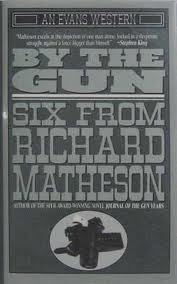

"Little Jack Cornered"
By the Gun
Evans, 1993

Subsequent appearances: Only available in this collection.

Notes: This was the basis for Matheson's season 3 Lawman episode, "Cornered."


"Of Death and Thirty Minutes"
By the Gun
Evans, 1993

Subsequent appearances: Only available in this collection.

Notes: This was the basis for Matheson's season 2 Lawman episode, "Thirty Minutes."


"Where There's A Will" with Richard Christian Matheson
Dark Forces
edited by Kirby McCauley
Viking, 1980

Subsequent appearances: Matheson Uncollected Vol. 2, Uncollected: Backteria and Other Improbable Tales


Editorial Comment:
It's not unusual for a son to follow in the writing footsteps of his father, but it's uncommon for the two to collaborate. Here is a rare and fortunate exception. Richard Matheson is a successful Hollywood screenwriter, author of many classic throat-gripping short stories and novels of terror—"Duel," "Prey," A Stir of Echoes, The Shrinking Man, I Am Legend—as well as one of the key writers to work with the late Rod Serling on the famous Twilight Zone television series. His son, Richard Christian Matheson, still in his mid-twenties, has already sold a number of short stories to magazines and anthologies and has begun a career in television scripting. He shows promise of making a strong mark of his own. Their combined talents concentrate here on the claustrophobic aspects of terror.


"The Near Departed"
Masques II
edited by J.N. Williamson
Maclay, 1987

Subsequent appearances: Collected Stories HC, I Am Legend & Others, Collected Stories TP v3


Editorial Comment:
     Few fantasists have written more Americandescently than R. Matheson, Esq. He was one of the first to place his darker speculations in surroundings not, I think, unlike your own. Because of this and the fact that his tales customarily are set now, his surgical introduction of the unexpected involves almost any reader from the outset. 
     Dick Matheson has never been surpassed in the uses of identifiable terror. It emerges through dialogue that rises like reality from a printed page. The author of The Shrinking Man, "Duel," "The Test," What Dreams May Come, "Being," Bid Time Return, and "Prey," won, in 1984, the World Fantasy Award for Life Achievement. Maybe they should have retired it.
     With a glittering jewel of a Richard Matheson short-short you've never read before looming ahead, what more needs to be said?

"Buried Talents"
Masques II
edited by J.N. Williamson
Maclay, 1987

Subsequent appearances: Collected Stories HC, I Am Legend & Others, Collected Stories TP v3


Editorial Comment:
     In He Is Legend, a tribute to Dick Matheson "compiled by Mark Rathbun and Graeme Flanagan," it was the former who quoted the writer of I Am Legend, Hell House and the Shock series as saying he is "very easily dissuaded" from finishing work in progress. "...One or two people will turn it down, and I give up on it..." Such a waste.
     Ray Bradbury says, in Rathbun and Flanagan's charming brochure, "Richard Matheson is worth our time, attention and great affection," while Robert Bloch asserts Matheson "has enriched us all."
     He continues to do so in the tale ahead, a strangely unsettling, original work you won't soon forget. Its protagonist continues the sports theme to its diabolic limit"

Notes: In Collected Stories TP v3, Matheson told Wiater that he attempted to sell the story to Harlan Ellison for one of his anthologies (I assume one of the Dangerous Visions volumes - J.S.), but that Ellison hated it.


"Two O'Clock Session"
The Bradbury Chronicles
edited by William F. Nolan and Martin H. Greenberg
ROC, 1991

Subsequent appearances: Off Beat


Editorial Comment:
     Not many fantasy writers become legends in their own time, but Richard Matheson certainly lives up to the title of his published biography, He Is Legend. Of course, this title honors one of the author's best known science fiction/horror novels, I Am Legend, a long-established classic.
     Matheson's award-winning 900 page collection, Collected Stories, issued in 1989, contains 86 of his 100-plus shorter fictional works. He has published another 10 novels, including The Shrinking Man, A Stir of Echoes and Bid Time Return. Additionally, he has written more than 80 scripts for television, many for Rod Serling's Twilight Zone, plus individual TV films such as Duel, The Night Stalker, and his recent (1990) Dreamer of Oz. Also to his credit, some 20 feature films, headed by The Incredible Shrinking Man, The Legend of Hell House, and Somewhere in Time.
     In 1950, Richard Matheson's first printed story, "Born of Man and Woman," earned him immediate recognition, and he hasn't slowed down since. 
     Ray Bradbury was an early admitted influence. The story Matheson has written for The Bradbury Chronicles (dealing with the right of passage beyond death) subtly echoes "The April Witch," wherein Bradbury's Cecy sends her mind soaring out into other bodies.
     This one will stick like a burr in your memory.

Notes: In his afterword to Off Beat, Matheson indicates that the well intentioned homages were unlikely to equal any of Bradbury's own writings.


"Always Before Your Voice"
California Sorcery
 edited by William F. Nolan and William Schafer
Cemetery Dance, 1999

Subsequent appearances: Off Beat


Editorial Comment:
     Richard Matheson was born in New Jersey and raised in Brooklyn. He served as an infantry soldier in the Second World War (resulting in his vivid combat novel, The Beardless Warriors), and took his Bachelor of Journalism degree from the University of Missouri in 1949. He moved to California, got married (Rich and Ruth now have four children), and went to work for Douglas Aircraft. 
     Matheson was a founding member of the Group back in the early 1950s when we were aware of any such title. I met my future wife at a Matheson screen showing of a Poe film he'd scripted.
     Rich has had seven of his seventeen novels filmed, the most notable being The Incredible Shrinking Man, an SF classic that can still be viewed on late-night television. Most recently, in 1998, Robin Williams starred in Matheson's What Dreams May Come. He's written well over 125 scripts for film and TV (including Duel, which launched the career of Steven Spielberg), and more than 100 short stories. 
     When asked to contribute a new tale for this book, Rich declared: "Sorry, but I don't write short fiction anymore. Not since 1970." Then what about one from his files that never sold?
     Well yes, he did have a story he'd always liked, a character study that had failed to find a market. "I wrote it in 1954 when I was working on The Shrinking Man  in a rented house on Long Island. [The film sale of this novel brought Matheson and his family back to California.] It will be nice to see the story published at last." 
     We think so too. Offbeat Matheson. A subtle "mainstream" story about frustration and desire.
     Meet Mr. Smalley and Miss Land.

Notes: Matheson expresses great pride for this straight story in his afterword to Off Beat.


"All and Only Silence"
Off Beat: Uncollected Stories
Subterranean, 2002

Subsequent appearances (as The Last Blah in the Etc): Matheson Uncollected Vol. 1, Bacteria & Other Improbable Tales.

Notes: Matheson's original title, "The Last Blah in the Etc" was changed by William F. Nolan for this collection.


"Phone Call From Across the Street"
Off Beat: Uncollected Stories
Subterranean, 2002

Subsequent appearances: Only available in this collection.

Notes: In his afterword to Off Beat, Matheson notes that this story, written entirely in dialogue, was performed by he and William F. Nolan, and recorded at a Group meeting.


"Maybe You Remember Him"
Off Beat: Uncollected Stories
Subterranean, 2002

Subsequent appearances: Only available in this collection.

Notes: This is Matheson's sole baseball story.


"Mirror, Mirror..."
Off Beat: Uncollected Stories
Subterranean, 2002

Subsequent appearances: Only available in this collection.


"That Was Yesterday"
Off Beat: Uncollected Stories
Subterranean, 2002

Subsequent appearances: Only available in this collection.


"Life Size"
Off Beat: Uncollected Stories (exclusive to 52-copy lettered edition)
Subterranean, 2002

Subsequent appearances: Gauntlet Press Sampler, Matheson Uncollected Vol. 1, Bacteria & Other Improbable Tales.


"Pride" with Richard Christian Matheson
Pride
Gauntlet, 2002


Subsequent appearances (of just Matheson's final draft): Matheson Uncollected Vol. 1, Bacteria & Other Improbable Tales.

Notes: This Gauntlet book features Matheson's first draft in longhand, a typed draft, Richard Christian Matheson's hadwritten first draft, a typed draft, and a final draft. Finally, a teleplay of the story written in collaboration with Richard Christian Matheson.


"Portrait" inspired by an illustration by Tenille Turek
Framed: A Gallery of Dark Delicacies
edited by Gomez and Morticia Howison
Dark Delicacies 2003

Subsequent appearances: Matheson Uncollected Vol.2

Notes: A horror charity book published by the owners of Dark Delicacies in Burbank, California, the concept behind framed was that several artists would create a piece of art with a framed border, or with a framed piece of art within them. The art was then randomly distributed to the authors to write a one-page interpretation of it. While Matheson's contribution was a single paragraph and a one-sentence postscript, it was perfectly fitting the artwork.


"Revolution"
Darker Places
Gauntlet, 2004

Subsequent appearances: Only available in this collection.


"The Puppy"
Darker Places
Gauntlet, 2004

Subsequent appearances: Only available in this collection.


"Little Girl Knocking on My Door"
Darker Places
Gauntlet, 2004

Subsequent appearances: Only available in this collection.


"Cassidy's Shoes"
Darker Places
Gauntlet, 2004

Subsequent appearances: Only available in this collection.


"The Hill"
Darker Places
Gauntlet, 2004

Subsequent appearances: Only available in this collection.


"Intergalactic Report"
Darker Places
Gauntlet, 2004

Subsequent appearances: Only available in this collection.


"Haircut"
Masques V
edited by J.N. Williamson
Borderlands, 2006

Subsequent appearances: Matheson Uncollected Vol. 2, Uncollected: Backteria and Other Improbable Tales


Editorial Comment: 
Occasionally—albeit unconsciously—I'll find that writers submitting stories to Masques will repeat certain motifs. You'll find a trio of ghost stories this time around, as well as 2 stories from legends in the field that are set in a barbershop. Here is the first, and a wickedly funny, chilling visit it is, courtesy of one of the greatest writers ever to grace this field, Richard Matheson, author of The Shrinking Man, "Duel," I Am Legend, and—oh, come on! Do I really need to introduce this towering figure of imaginative fiction?
Didn't think so...


"An Element Never Forgets"
Matheson Uncollected Vol. 2
Gauntlet, 2010

Subsequent appearances: Uncollected: Backteria and Other Improbable Tales


"Backteria"
Uncollected: Backteria and Other Improbable Tales
Gauntlet, 2013

Subsequent appearances: Only available in this collection.


"My Conversation with Superman"
Uncollected: Backteria and Other Improbable Tales
Gauntlet, 2013

Subsequent appearances: Only available in this collection.


"A Murder Story Told in Two Hundred Clichés"
Uncollected: Backteria and Other Improbable Tales
Gauntlet, 2013

Subsequent appearances: Only available in this collection.
 

"The Enemy Within"
Star Trek 8
Adapted by James Blish
Bantam, 1972

Notes: While this is just an adaptation of Matheson's teleplay by James Blish, the author is acknowledged on the title page of the story.

--

I hope you have enjoyed this series on Richard Matheson - The Original Stories, and that it will be a valuable resource as you work on completing your own collection. When this series started, I needed half a dozen items to complete my collection. As I've picked up titles that I didn't have when working on the original sections, I've gone back and updated those entries. I'm down to my final three, and I expect those three to be tough (and expensive). But rest assured, when I do get them, I'll be back to fill in the holes in this series with any additional details I can provide.

Monday, June 3, 2013

Star-Spangled DC War Stories Part 3: August 1959


By Corporals Enfantino and Seabrook


Grandenetti
All American Men at War 72

"T.N.T. Broom!"
Story by Robert Kanigher
Art by Ross Andru and Mike Esposito

"Space for a Hero!"
Story by Bob Haney
Art by Russ Heath

"Bench for a Frogman"
Story by Bob Haney
Art by Ross Andru and Mike Esposito

PE: "Space for a Hero" explains to us why soldiers may leave a space while marching in line: a slot is left open for a missing hero in the hope that he'll return and fall back in with his comrades. Just such a hero is Joe Lane, who sacrifices life and limb for his fellow soldier time and again. After being separated from his squad after a particularly harrowing incident involving a hedgerow (!), his men observe the practice of the "space for a hero" and, eventually, Joe Lane finds his way back. This story shows me that Russ Heath's area of expertise is the sky rather than the battlefield. While the art is not bad, it doesn't reach the heights of, for example, Heath's "Grandpop's Jet!" in Our Fighting Forces this month. There's not much of a story here, more like a vignette, and the sight of the men walking on Joe Lane's back, after he's dived through a hedgerow to part the way for his fellow GIs, is sadly hilarious. When Lane shows up, he doesn't even give an explanation as to where he's been, just an "I got taken away from the hedgerow..." Does that mean he was captured? Could he have been turned? Perhaps Haney is just warming us up for a sequel: "Space for a Turncoat!"

"T.N.T. Broom!"
JS: For a minute, I thought that was going to turn out to be a ghost story when Joe suddenly reappeared standing in the tank's path. But no such luck. This month's lead story is "T.N.T. Broom!" which demonstrates a couple of things we're starting to see regularly in the DC war books. First, the editors like to have a lead story with a recurring character or characters to keep readers coming back for more. This story features Tank Killer, who I think is the weakest of the three that have been developed so far (the others are Sgt. Rock and Gunner and Sarge). Once again, Tank Killer and Kid run around blowing up tanks with a bazooka. Also once again, the writer (Kanigher) picks a catch phrase and beats it to death--a "T.N.T. Broom" is a bazooka that sweeps tanks clean in front of it. I have not peeked to see how long the Tank Killer series lasts, but if it doesn't start to show some variety I hope it's short-lived.


Grandenetti
G.I. Combat 75

"Dogtag Hill!"
Story by Robert Kanigher
Art by Irv Novick

"Buck Private Jet!"
Story by Bob Haney
Art by Russ Heath

"Tin Pot for a Tank!"
Story by Bob Haney
Art by Jack Abel

PE: "Tin Pot for a Tank" opens with a rookie asking a Corporal the significance of a helmet atop a rifle buried in the ground. The Corporal explains that a "tin pot" is a salute to a fallen fighting man and that only men on the ground earn them. The newbie then heads off on his assignment: scouting the sector for enemy signs. He happens upon a U.S. tank and uses the giant as cover against enemy fire. Never seeing the men inside, the rookie nonetheless grows to respect them and the huge machine protecting him. After several battles, the tank is destroyed by an enemy plane but the rookie avenges the crew and places his own helmet and rifle in salute. A gritty, compact story that wastes no space and manages to do what other stories can't in twice the length: involve us in the lead protagonist and his journey through the battlegrounds.

PE: Jack Abel lacks the dynamic of a Joe Kubert but his art does the job; it's not cartoony whatsoever and, in spots, is quite accomplished. Abel was known primarily for his inking on several DC hero titles in the 60s and 70s but worked for Marvel as well. Extra credit for that fabulous Grandenetti cover as well.

JS: The cover uses black, white and blue to convey a sense of fighting at sea at night. Very nice. I'm surprised you did not comment on the strange and powerful lead story, "Dogtag Hill!" A young soldier grows into a man as he sees every other member of his company killed trying to take a hill in Korea. Why is the hill important? We are never told. Does the story end happily? Not at all. The last panels show the soldier standing alone on the hill, clutching the dogtags of his fallen comrades. Kanigher tells a very adult story here and Novick's art recalls that of E.C. war artists in places. This is a very strong story.


Grandenetti
Our Army at War 85

"Ice Cream Soldier!"
Story by Robert Kanigher
Art by Joe Kubert

"G.I. Cage!"
Story by Hank Chapman
Art by Jerry Grandenetti

"Something for the Sarge!"
Story by Bob Haney
Art by Russ Heath

PE: The new recruit who shows up afraid of his shadow and, by the end of the story, is the only one standing is a cliche that, unfortunately, we'll run into several times in our journey but is mostly avoided in "Ice Cream Soldier!" So what's so different about this one? Well, for one thing there's Joe Kubert's astonishing art. No one could draw battle scenes like Kubert. With very few words, Kanigher and his artist are able to convey the moment when the boy becomes the soldier. Another thing is the peek behind the hard surface of "The Rock."

You wouldn't have found anything like this in Marvel's Sgt. Fury and His Howling Commandos (still four years in the future), where the Sarge was all aggressive bombast and insults. Here we see the human side of Rock, first taking this green soldier under his wing and making sure he lasts through the day, then holding him up as the hero to the rest of the Easy when the kid saves their collective skin. Yeah, the climax is a bit far-fetched (tank fire all around, the boy falls into an icy river but manages to survive) but the message comes through: to survive, these kids had to grow up really fast.

JS: "When you're in Easy, Nothin's Easy!" You hit this one just right, Peter. The art is gorgeous and the story is emotionally satisfying. Rock shows himself to be hero and leader, tough and understanding--the perfect sergeant. Does anyone draw soldiers' faces better than Kubert? "G.I. Cage!" is also a tense, exciting story, in which a lone soldier escapes from a Korean prison camp. The third story, "Something for the Sarge!" shows a trend developing--the close relationship of the soldiers with their sergeant. We saw it with Rock and Easy, and we see it in "A Statute for Sarge!" in this month's Our Fighting Forces. Where would the army have been without these middle managers to keep everything together?


Grandenetti
Our Fighting Forces 48

"A Statue for Sarge!"
Story by Robert Kanigher
Art by Jerry Grandenetti

"Frogman on Ice!"
Story by Hank Chapman
Art by Jack Abel

"Grandpop's Jet!"
Story by Bob Haney
Art by Russ Heath

PE: In "Grandpop's Jet," a World War II fighter pilot finds himself "frozen out" when he becomes a jet pilot in Korea. Are the young kids too cool to swing with the old man? Despite showing moves that would dazzle the typical pilot, the youngsters aren't biting. When an enemy MIG frazzles his electronics, our hero must resort to old-style tactics and fly the jet as though it were his old Mustang. Once he puts the MIG out of his misery, the ace returns to base to find a hearty welcome. Turns out the boys are dazzled by the old timer's skills and welcome him into the fold. Russ Heath certainly seems to have a way with fighter jets. His battle scenes are exciting and fabulously choreographed. Bob Haney's story accentuates the irony (the old guy only wants to fit in with the youngsters and the youngsters just want to see some old-style tricks) without shoving it in our face. A very good story.

"Frogman on Ice!"
JS: "Grandpop's Jet!" is also notable because it takes place in the Korean War, making it a rarity in the DC war comics we've read so far. Most of the stories occur in WWII. This issue's Gunner and Sarge story is "A Statue for Sarge!" I am quickly growing fond of these recurring characters. Gunner narrates this tale and tells of Sarge's good-natured ribbing about how Gunner needs to make a statue for him. Sarge is no-nonsense when it comes to battle, however. One question I had while reading this: where the heck are they that they can encounter a Japanese soldier in the jungle, a Japanese Zero plane, and then a group of Nazi soldiers? Were the Japanese and the Nazis ever fighting in the same place during WWII?


Novick
Star Spangled War Stories 84

"Battle Doll!"
Story by Robert Kanigher
Art by Jerry Grandenetti

"Blind Bomber!"
Story by Hank Chapman
Art by Mort Drucker

"No Flag for a Sand Fly!"
Story by Bob Haney
Art by Jack Abel

PE: Obviously a bid for a younger female audience (an anemic demographic when it comes to war comics, I'd wager), "Battle Doll" is an awful mess about a French freedom fighter known only as Mademoiselle Marie. We know she's French because the  paratroopers sent to assist her in her underground work are dropped into occupied France but, more importantly, because Marie says things like "Zis isn't romance, Monsieur! Eet is war!" Perhaps the most startling fact we learn about female FFs is that they're able to heft a machine gun, toss grenades with the accuracy of Randy Johnson, and detonate TNT, all while keeping their hair, nails and make-up parfait! The bad news is that this is only the first of the Mademoiselle Marie stories Robert Kanigher hefted on us. Here's the real curveball: in Detective Comics #501 (April 1981), ace funny book writer Gerry Conway had Marie murdered and the ensuing investigation revealed that Marie had found time between gunning down mobs of Nazis and cooking baguettes to have a roll in the hay with none other than Alfred Pennyworth. The union begat a daughter named Julia. She was also one of Sgt. Rock's sweethearts. Ya gotta love these wildly imaginative comic book writers. Marie appeared in eight headlining appearances (all in SSWS) and then was relegated to co-star status in the DC Universe before heading off to zat great underground in zee sky!

"Blind Bomber!"
JS: Peter, you are a vache espanol! I really enjoyed this story. When the final caption asked if we readers want to see more of Madame Marie, I was ready to write in with a hearty "Oui! Oui!" "Blind Bomber!" is a neat story about a fighter pilot who loses his vision in the middle of a flight but still manages to carry out his bombing raid, shoot down an enemy plane, and land safely, all with only the radio to guide him. The doctor tells him he'll be okay at the end but it's a pretty harrowing experience with sharp art by Mort Drucker.


And Coming Next Week!


Thursday, May 30, 2013

The Hitchcock Project: Henry Slesar Part Four-"The Right Kind of House" [3.23]

by Jack Seabrook


"The Right Kind of a House" is a good example of a tightly written short story that was adapted for television  in classic style. Slesar's story begins on a slow day at Aaron Hacker's real estate office, when a car with a New York license plate pulls up and a fat man in a colorless suit walks in. His name is Waterbury and he is interested in a house for sale on the edge of town. The eight-room colonial is listed for $75,000 but is worth $10,000 at most. Old Sadie Grimes lives there and it has been for sale since her son died, five years before. The house is not well-maintained, but Hacker thinks that the high price tag means that she does not really want to sell.

Waterbury drives out to Sadie's house, where she welcomes him and offers him lemonade. Sadie tells Waterbury that she is not willing to lower her price and he capitulates, agreeing to it with minimal argument. Serving the lemonade, she tells him the history of the house and of her family, including her late son Michael, who grew up without a father and left home. He came back after nine years with a small suitcase, agitated because he was in trouble. A man came the next night, argued with him, and shot and killed him. Sadie learned that her son and the other man had stolen thousands of dollars and that her son had run off with the money, eventually going home and hiding it in the family house. Sadie knew that his killer would return one day for the money and she knew that he would be "willing to pay too much for an old lady's house." Waterbury, his "head rolling loosely on his shoulders," comments that the "lemonade is bitter," and we realize that Sadie has poisoned her son's killer.

The ending of "The Right Kind of a House" is a classic twist, where the payoff is so subtle that it takes a moment to dawn on the reader just what has happened. Slesar's tale was published in the February 1957 issue of Michael Shayne Mystery Magazine.


The Right Kind of House
Robert C. Dennis adapted Slesar's story for Alfred Hitchcock Presents as "The Right Kind of House" (dropping the indefinite article) and the show was broadcast on March 9, 1958. Dennis's script uses the classic technique for taking a story off of the page and putting it onto the screen; he shows rather than tells and uses flashbacks to portray events that are only referred to in the source. The show begins with shots of Waterbury driving into Ivy Corners and stopping to admire Sadie's house, noting the name on the For Sale sign. The script then follows the story closely, though it is notable that Dennis solves a slight technical problem that existed in Slesar's original. The price of the house is reduced to $50,000, which is still five times what it is worth. This will be important later in the episode.

There is an interesting shot (Don Taylor directed the show) when Waterbury first enters Sadie's house: the camera starts way back to show the whole living room and very slowly dollies in until it frames Waterbury and Sadie in a two-shot as they sit down to talk.

Dollying in slowly
As Sadie tells Waterbury the story of the house, we see her son Michael in a series of flashbacks. The script expands the story's timeline so that, rather than coming home and getting shot the next night, Michael comes home, stays for the summer, and is killed later on. Director Taylor's shot choices and camera movements are above average and serve to tell the story quickly and effectively. As Sadie, Jeanette Nolan gives an outstanding performance, her expressions and movements showing love, concern and forgiveness for her son, emotions that later change to ones of resignation and resolve. Robert Emhardt plays Waterbury and his high, nasal voice is unforgettable, making it important that Sadie heard the voice of her son's killer, even if she did not see his face. In the flashback where Michael is killed, we hear "Hello, Mike" in what is clearly Emhardt's voice. Sadie hears a tussle downstairs and then a shot; she rushes to the landing and sees the legs of the killer, though those legs do not look like those of a man of Emhardt's girth.

Robert Emhardt
In another flashback, Sadie is questioned by a local policeman and a New York detective and she lies about having seen Michael's little black bag. She learns that he was involved in a bank robbery where over $200,000 was stolen, which fixes the small technical problem from Slesar's story--it does not make sense that a man would pay $75,000 to buy a house to recover "many, many thousands of dollars," but it is understandable that one would pay $50,000 to find $200,000 in hidden loot.

Why does Sadie lie to the police about having seen the bag? She admits to Waterbury that she lied and that she never searched for the bag. Perhaps her goal from the start was to find her son's killer and bring him to a sort of rough justice by poisoning him; by making it known that the money was never found she ensured that the killer would one day return. The final scene of the show is a tense one, when Sadie and Waterbury reveal themselves to each other. Waterbury's salesman's smile is frightening, as he threatens the older woman in a calm voice, but she gains the upper hand by pointing out that she did not tell him her story until after he had drunk his lemonade. He collapses on the floor as she rocks silently in her chair, recalling the rocking figure of Eternal Motherhood in D.W. Griffith's Intolerance (1916) and Walt Whitman's "Out of the cradle, endlessly rocking"--here, the figure of the rocking woman represents the justice that awaited the guilty man sitting across from her.

Endlessly rocking
As in the prior Slesar episode, "On the Nose," the musical cues in "The Right Kind of House" are especially good, and Don Taylor works with director of photography Lionel Lindon to create a shadowy. noirish mood in the flashback scene where Michael is killed..

Robert C. Dennis (1915-1983) wrote hundreds of scripts for television in his career, including 30 for Alfred Hitchcock Presents. He worked on the script for "A True Account" along with Fredric Brown. He also wrote for Batman and The Outer Limits.

Don Taylor (1920-1998) began his career as an actor in the 1940s but also began directing in the 1950s, mostly for television. He acted in one episode of Alfred Hitchcock Presents and directed seven.

Robert Emhardt (1914-1994) had a thirty year career in TV and movies and appeared in seven episodes of the Hitchcock series, including De Mortuis.

Jeanette Nolan (1911-1988) began her career on radio in the 1930s and moved into movies in the 1940s and TV in the 1950s. She played hundreds of roles on TV and was seen in Fritz Lang's The Big Heat (1953) and Hitchcock's Psycho (1960), where she was the voice of Mrs. Bates. She was on Alfred Hitchcock Presents four times, and she also had roles on The Alfred Hitchcock Hour, Thriller, The Twilight Zone, and Night Gallery.

Jeanette Nolan
James Drury (1934- ) plays the role of Sadie's son Michael in the flashback sequences. This was his only role on the Hitchcock series but he would later star for nine years in the lead role of the series, The Virginian.


Jeanette Nolan and James Drury
Finally, in the small role of realtor Aaron Hacker is Harry O. Tyler (1888-1961), who also appeared in "The Dangerous People" and "And So Died Riabouchinska." Tyler's list of movie and TV credits is long and includes eleven episodes of Alfred Hitchcock Presents, the Marx Brothers film A Night at the Opera (1935) and the John Ford classic, The Grapes of Wrath (1940).

Harry O. Tyler
"The Right Kind of House" can be purchased on DVD here or watched for free online here.

Sources:
Grams, Martin, and Patrik Wikstrom. The Alfred Hitchcock Presents Companion. Churchville, MD: OTR Pub., 2001. Print.
IMDb. IMDb.com, n.d. Web. 25 May 2013.
"The Right Kind of House." Alfred Hitchcock Presents. CBS. 9 Mar. 1958. Television.
Slesar, Henry. "The Right Kind of a House." 1957. Clean Crimes and Neat Murders: Alfred Hitchcock's Hand Picked Selection of Stories by Henry Slesar. Ed. Alfred Hitchcock. New York: Avon, 1960. 85-91. Print.

Wikipedia. Wikimedia Foundation, n.d. Web. 25 May 2013.

Monday, May 27, 2013

Do You Dare Enter? Part Two: March-June 1969


The DC Mystery Line 1968-1976
by Jack Seabrook,
Peter Enfantino
& John Scoleri


Nick Cardy
The Witching Hour 1 (March 1969)

"Save the Last Dance for Me!"
Story by Denny O'Neil
Art by Pat Boyette

"Eternal Hour!"
Story and Art by Alex Toth

"The Perfect Surf or How to Make Waves Without Even Trying!"
Art by Jack Sparling

Peter: DC launched the second title in its budding mystery line in March 1969 with The Witching Hour. Whereas the House of Mystery (and the upcoming House of Secrets) was maintained by a single mascot, TWH was introduced by a trio of witches: Cynthia, Mordred, and Mildred, constantly aflutter around their boiling cauldron. The humor found in Cain, caretaker of the HOM, was carried over into this title as well. We first encounter the three witches while they're scolding their man(?)servant Egor for bringing home frozen pig's feet rather than the requested cloven hooves. We discover quickly that there is a divide between the two old hags, Mildred and Mordred, and their cousin, the gorgeous new-age dazzler, Cynthia ("Spare me that 'double bubble, toil and trouble' bit!") and the stories included in each issue are a competition of sorts to see which generation can tell the more frightening stories.  One difference in the new package was the cover artist. Nick Cardy had done the initial House of Mystery (the classic image that opens our blog) but then turned over the reins to Neal Adams. Cardy would do 46 of the 66 covers of The Witching Hour issues we'll cover in this blog, including the fabulously atmospheric first issue.

Toth or Adams?
Jack: I got a big kick out of the framing story in this issue. It's really goofy and fun and I like being asked to judge which tale is the best. Alex Toth is credited with both script and art and, while his drawing style is not quite up to the level he reached in the 1950s, it's still much better than the sort of thing he would be doing about ten years later. I also like that Cynthia has cat's eyes!

John: While I also enjoyed the approach of using the three witches, I thought we were in for real trouble with the emphasis on the hip, sixties witch. And maybe it's the result of my being from a later generation than you two, but I didn't find Cynthia particularly attractive...

signed by Toth
Peter: So what about the contents inside this premiere issue? "Save the Last Dance for Me" and "Eternal Hour" are marred by silly stories and "twist" endings that make no sense but are saved by great art. Pat Boyette concurrently worked for Charlton and contributed scads of really creepy artwork for titles like Haunted, Ghost Manor and The Many Ghosts of Doctor Graves. For my money, his greatest work is "The Rescue of the Morning Maid" for Warren's Creepy (#18, January 1968), a nightmarish, almost surreal, ghost story that has to be read to be believed. Nobody's art looked like Alex Toth's--blankets of black and that stick-figure lettering, and you could spot his stuff a mile away. We'll be discussing Toth's art quite a bit on our war blog. The final story, "The Perfect Surf or..." is a goofy little nothing about a surfer searching for the "perfect wave" and the rotten kids around him who decide to play a practical joke on him. They tell him they've heard about a witch in a hut on a beach (!) who can point him in the direction of that little piece of heaven. Who wins and who loses is up in the air. The Old Witch seems to get what she wants. Our beach boy definitely gets what he wants, despite it costing him his life (ostensibly). It's got a very silly ending but I like it because of its silliness rather than in spite of it. By the way, the GCD, an incredible source of information that Jack and I rely on constantly for artist and writer credits, credits Neal Adams for that epilogue (a two-page wrap-up of the argument between the witches) and notes that the acknowledgement came from Neal himself. It sure looks like Toth to me though.

Credited to Adams--the blonde is clearly Neal's work
Jack: I'm not ready to agree that these stories feature great art, but they are fun. What I liked most about this issue was the concept and the way it was executed. The frame is long and involved, much more detailed than the brief appearances by Cain over in HOM. I can see a glimmer of Adams in the last part of the frame, but I have to say that, if we accept that Adams drew the last two pages, the first four pages look more like his work than that of Toth, judging from the second story in the issue. All in all, a fun start to this series!

John: While I thought the first and third stories were forgettable, "Eternal Hour" gets my vote for best of show in this premiere issue, for decent art and the most interesting story. I also thought it was funny that only the hip-witch Cynthia's story featured a classic old crone. Go figure!


Neal Adams
The House of Mystery 179 (April 1969)

"Sour Note!"
Story by E. Nelson Bridwell
Art by Jerry Grandenetti and George Roussos

"The Man Who Murdered Himself!"
Story by Marv Wolfman
Art by Berni Wrightson

"The Widow's Walk"
Story by Howie Post
Art by Neal Adams and Joe Orlando

Jack: This is the first issue of House of Mystery to feature all-new stories, and it's a mixed bag. "Sour Note!" tells of a man who meets a beautiful female ghost. She does not understand what he says so she writes him a note in a language he can't read. He then proceeds to show the note to everyone he cares about in an attempt to have it translated. They all react with disgust and anger and banish him from their lives. He eventually loses everything and turns up at the police station, where they show him the note and he can finally read it. It says, "April Fool!" This is the kind of shaggy-dog story that gives scary comics a bad name.

Peter: Wow, is it ever a mixed bag, Jack! "Sour Note" is incredibly stupid and badly written. Examples? "I stepped out onto the porch and heard the creak of the boards yell beneath me as I moved to the front door and knocked gingerly, my knuckles barely touching the door as it opened with a rusty screech, revealing a musty vacancy inside..." But not all of it is that overwritten and hyperbolic. How about this, then: "My obsession with the note really haunted me!" It all builds up to a punchline that never comes, topped with an expository from Cain just in case we didn't get what was going on. I still don't know what it's supposed to mean. Why would the ghost give the note to our unnamed narrator? What's the motive? Who knows? I assume E. Nelson Bridwell couldn't figure it out either. Just skip the hard part and blind them with your bullshit, I says. Oh, and E., the artist's name is Charles Addams.

John: And to think that for a few pages I was actually curious to read what was written in the note. For my money, had the story ended with us seeing the note was blank, it would have been far more satisfying. Instead, we get a inexplicable cop-out. Fool me once, Cain...

Jack: "The Man Who Murdered Himself!" is a supposedly "true" story that is notable for being one of Berni Wrightson's first professional credits. It's only three pages long and the story is not very interesting, but that Wrightson magic is already evident.

John: I'm reading these first issues by way of the black and white Showcase reprints, and I can honestly say, based on seeing the color variation above, that Wrightson's art is much better suited for black and white than such a garish color palette. Unfortunately, this 'true' tale doesn't live up to the art. So once again, Sergio Aragones' Cain's Game Room saves the day. Can't go wrong with a handful of his single panel cartoons with a dark twist.

Peter: "Widow's Walk" is a meandering mess about a seaman who weds Mary to gain her father's inheritance and, when he finds he's been left out of the will, dumps her like a sack of laundry. Mary doesn't cotton to this treatment and curses Angus as he heads back out to sea: "I shall will you never to reach harbor until the day I die!!" Sixty years go by and Mary finally drops of old age and Angus is allowed to come back to port. He's a little worse for wear and barnacles. What's not made clear (yes, I know it's a 10-page story) is the scope of the curse and why Mary suddenly has the power to lay said curse on Angus and his ship. Was she born into a supernatural line? Why couldn't Angus simply put in at Boston harbor or San Francisco? That last panel's a creepy keeper, though, despite the slapdash story.

An obvious homage to EC, but a great one!
John: Wow! This one looked to be an irredeemable by-the-numbers tale of greed, so imagine my surprise when it paid off in a single panel! It almost makes up for the long slog getting there. Sadly, it left me wanting to read the story that starts with this premise...

Jack: "The Widow's Walk" is one of the worst examples of Neal Adams's artwork I've ever seen. We can't blame the inker, since it's Joe Orlando. More likely, Adams just dashed this one off to make a quick buck. There are some of the classic Adams touches here and there, but there are also panels that barely look like his work.

This panel is not included in
The Best of Neal Adams


Nick Cardy
The Witching Hour 2 (May 1969)

"Untitled (Yarrghh!)"
Art by Jack Sparling

"The Trip of Fools!"
Art by Jose Delbo

"Once Upon a Surprise Ending"
Art by Jack Sparling

Peter: "Yarrghh!" is yet another variation on The Tell-Tale Heart, this time starring a businessman who murders a younger colleague after having been skipped over for a promotion. He's then haunted by the man's scream, eventually to the point of madness. Even back in 1969, this must have been a tired old suitcase. Sparling's exaggerated, cartoony style actually suits the silliness of the story (you can almost feel the sweat that runs off Sparling's fat guys) but it's that silliness that eventually weighs it down and sinks it.

Jack: I enjoyed this story, though I admit it's an old one and I knew how it would end. Did you notice how the fat witch telling the tale was puffing and sweating as she ran along with the main character? Pretty neat.

John: By issue two, I was tired of the three witches framing device, and things went downhill from there.


Peter: The word silly could be used for "The Trip of Fools" as well but the theme is a bit more serious. Well, we think it's serious. Just before the Civil War, an African slave has the power to make his captors disappear in a poof of smoke. It's only after eight pages that we discover that the slave is actually an alien in disguise. He's traveling around, teleporting slave bosses to his planet. In an overly expository last panel, the disguised alien explains to his home crew (also disguised as Africans--why? who knows!) "You may radio a report to our planet that our mission was successful! These primitives will be most useful as nursemaids rearing our children in the ways of harshness and cruelty," but then inexplicably adds "get me off this planet--there is something about life here that disturbs me..." Why would the hatred and inhumanity the alien witnesses disturb him when he's here to handpick louses in the first place? He's heading back to a barbaric planet but he's upset about our way of life. Interesting. But stupid. This is an example of a writer wanting to make a statement about civil liberties without actually knowing how.

Jack: Whoa! I did NOT see that ending coming. I liked this story more than you did, though I was puzzled by how the clocks kept striking midnight on what appeared to be the same night. This comic hit the stands in early 1969, right after the turmoil of 1968, so a story about slavery was very timely. For a short comic book story stuck in the middle of a scary mag, I thought it was pretty well done.

John: Okay, I think I'm beginning to get it. The writers were handed a last panel and told to craft a spooky story around it, and given a specific number of pages to fill. Unfortunately, there are no last-panel redemptions to be found in this issue. Which gets us to our next story up for review...


Peter: "Once Upon a Surprise Ending" is a 5-page toss away, enlivened by some snappy, amusing dialogue and a so-so Sparling art job. There's no substance at all (and a "surprise ending" that's been used far too many times) unless it's meant to be a satiric take on the modeling business of the late 1960s (a photographer's declaration that the gorgeous subject in front of him  is "not a queen--just a princess! That skinny English dame is the queen" is obviously aimed at super-model Twiggy) or possibly on the shallow nature of chasing beauty. It also could be just another silly comic book story. Again, Jack Sparling suits this type of material. The GCD lists no credits for the writers this issue.

Jack: Just silly stuff, but fun! It's interesting how this comic seems to have one satirical short story in each issue, at least so far.

John: Well, if it works for a third of the readers, that's better than nothing. Again, I guess I was born too late to appreciate the hipster chic of these disappointing tales.


Neal Adams
The House of Mystery 180 (June 1969)

"Comes a Warrior"
Story by Gil Kane
Art by Gil Kane and Wally Wood

"His Name is... Cain Kane!"
Story by Mike Friedrich
Art by Gil Kane and Wally Wood

"Scared to Life"
Story by Marv Wolfman
Art by Bernie Wrightson


Jack: I don't know how "Comes a Warrior" ended up in House of Mystery, but I'm glad it did! Rangarry, a warrior in 673 A.D. who looks more than a little bit like Thor and swears by Odin, vanquishes a dragon only to find that the dragon was the only thing preventing the temple demons from roaming free. The art is stunning and features plenty of great action poses by the master. I don't see any of Wally Wood's handiwork here, though he's credited with the inks.

John: I was excited when I saw Wood's credit, followed by a page of three large panels of a bizarre rocky landscape that appeared to be his... but I also failed to find a trace of him after that. Still, the initial dragon of the story made me think of the Marvel Godzilla stories I read as a kid. If only the art that accompanied the twist ending was more menacing and less comedic, we might have a more powerful tale here.

"Comes a Warrior"
Peter: What if Thor made a mistake now and then? That seems to be the question behind Kane's masterpiece, a sword and sorcery tale that sports a killer finale. In the beginning, I suspected I was only in for another derivation of Conan (to be fair, this actually predates Marvel's Conan the Barbarian by more than a year) but what I got was far more sly. Then we have the added bonus of a sort-of sequel in "His Name is... Kane," a trippy behind-the-scenes of the DC locker room, complete with a cameo from editor Joe Orlando. Lots of in-gags and subtle jabs, as when Kane complains to Orlando that "those second-hand factory workers you call writers don't know a story plot from a piece of ground!"or when, sucked into his own artwork, he screams: "...faced with the terrible torture of the worst possible demons -- an editor and a writer!" Musing that he'll dump mainstream comics and publish his own project is an allusion to the failed His Name is... Savage (providing an obvious inspiration for the title of the HOM story), a violent magazine-sized experiment, written and drawn by Kane, published the prior year by Adventure House. Kane's Savage was inspired by actor Lee Marvin and his role as Richard Stark's Parker character in Point Blank (1967). As humorous as some of "His Name..." is, the reader gets the feeling (most prevalent in the panel where Gil, enveloped in his own artwork, is framed and hung on a wall) that Gil Kane felt trapped and suffocated by the comics business. Despite this vibe, both stories are solid gold.

Jack: These stories don't often work, but this one is very funny, especially when Kane complains that he's sure to be stuck with a terrible inker--in this instance, he's being inked by one of the all-time greats!

Peter: In an interview with Jon B. Cooke, published in Comic Book Artist #5 (Summer 1999), Gil Kane revealed that he wasn't getting along with DC Editorial Director Carmine Infantino at the time and that "His Name is... Kane!" was Carmine's way of "getting back" at the artist: "Clearly because I had the material outline I knew what they were going to do but they did everything they could to needle me. I tried to get back at them as much as possible by drawing Carmine in there, I drew Mike Friedrich with a face full of ulcers, and I drew Joe Orlando as a monster. I tried to get back at them. It really didn't level me or anything. The job came out pretty well." Indeed it did!

John: An odd diversion for 'Page 13,' to be sure. Fortunately, it didn't signal the end of Aragones' involvement in HOM, as his Cain's Game Room was not only right behind this story, bringing a smile to my face, but also for a double-dip before the issue closes out! I was hoping one of my colleagues might have covered the illustrated two-page prose tale, "Oscar Horns In!," since I've never been fond of prose stories squeezing their way into my comic books. It's almost as if DC was trying to remind us to eat our vegetables. Well, if one of you out there took the time to read it AND found it to be worthwhile, I'm counting on you to let us know through the comments.

Wrightson!
Jack: With the three-page chiller, "Scared to Life," by Berni Wrightson, we have our first classic issue of HOM: a Neal Adams cover, Gil Kane & Wally Wood, and Berni Wrightson! It doesn't get better than this. And, as a DC fan, I should add that the house ads this month feature several classic covers--1969 was a great year for DC.

John: A Wrightson tale written by Marv Wolfman, no less! While Wrightson's art again proves to be worth the price of admission (and even more stunning reproduced in black and white), Wolfman's tale ends rather abruptly, causing me to wonder if this story would have been well served with the two pages used for the prose story. It seemed to me like the key thing missing was a sound effect heralding the elevator crash. Now that I think about it, I'm not sure if I've ever seen Wrightson use that storytelling technique. I guess I will remain on the lookout for that in future issues.


The Retro-Ad Page

eBay, here we come!
Wertham musta choked on his ham sammich when he saw
this thinly-veiled example of bestiality in comic books!

And... Coming Next Week!